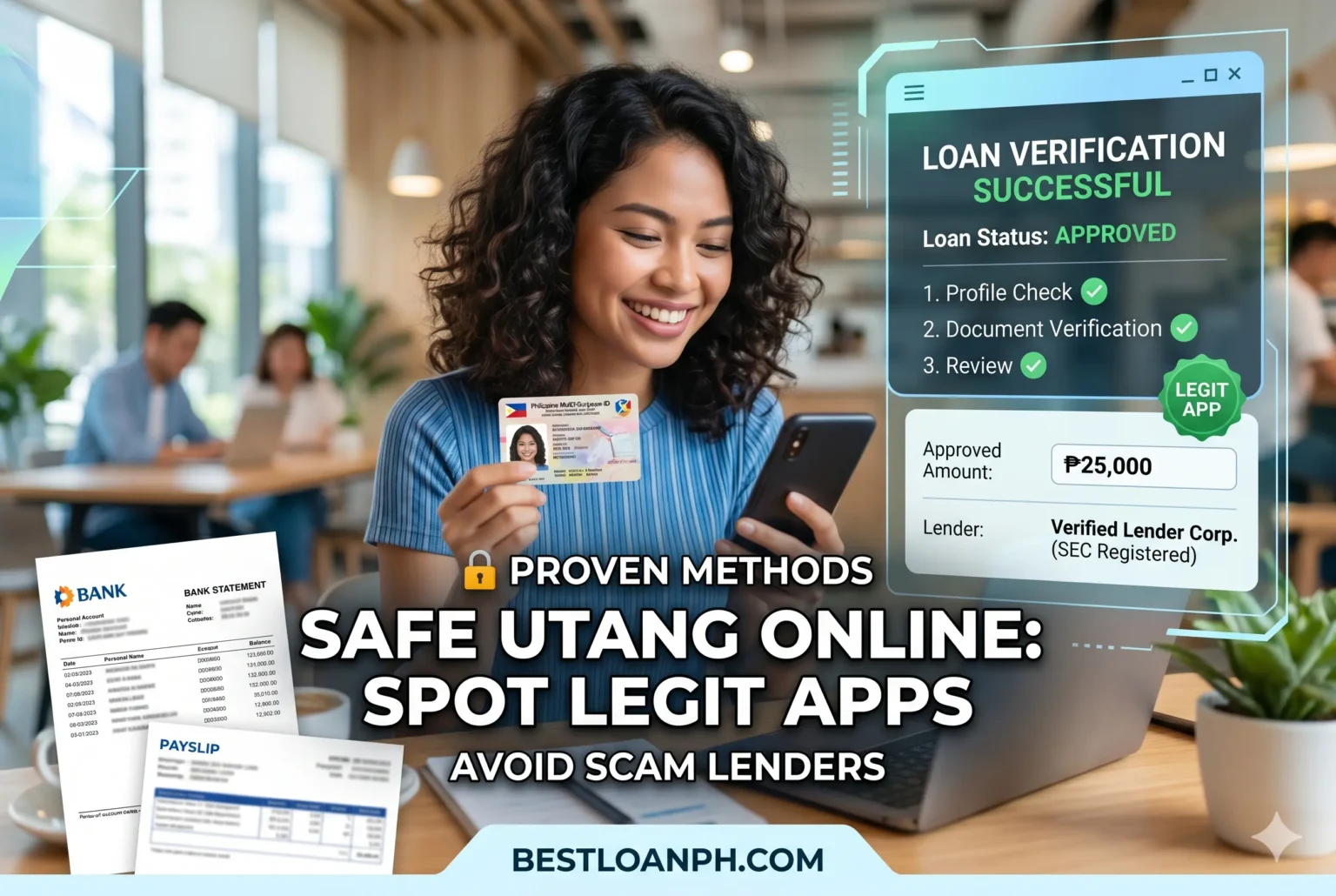
Many Filipinos now rely on mobile lending apps for emergency cash, bill payments, tuition, or short-term liquidity. But the rise of digital lending has also created a dangerous wave of abusive lenders, fake loan apps, phishing operations, and illegal collection practices. Searching for safe utang online options is no longer only about finding fast approval — it is about protecting your identity, privacy, finances, and mental well-being.
Some apps operate legally under Philippine regulations. Others use intimidation, hidden penalties, contact harassment, fake approval messages, or unauthorized data collection. Borrowers often realize the risks only after uploading IDs, granting contact access, or receiving threatening calls from collectors.
This article explains how to identify legitimate online lenders, recognize scam patterns early, verify compliance signals, and borrow responsibly within the Philippine digital lending ecosystem.
Summary
Safe utang online apps in the Philippines typically show clear SEC registration details, transparent repayment terms, secure app distribution through official stores, proper privacy disclosures, and lawful collection behavior. Illegal lenders often rely on APK downloads, excessive contact permissions, hidden fees, harassment tactics, fake approval SMS messages, and unclear identities. Borrowers should verify SEC legitimacy, review app permissions carefully, avoid lenders requesting suspicious upfront payments, and prioritize platforms with compliant KYC processes, secure OTP verification, and transparent repayment schedules. Understanding these warning signs helps users avoid predatory lending, privacy abuse, and financial scams while choosing safer digital borrowing options.
Why “Safe Utang Online” Matters More Than Fast Approval
Many borrowers initially focus on approval speed, loan amount, or minimal requirements. Scam lenders know this. They intentionally market phrases like:
- “Guaranteed approval”
- “Instant cash in 5 minutes”
- “No verification needed”
- “Auto-approved kahit may bad record”
These promises target financially stressed users who may ignore security warnings during the application process.
Legitimate digital lenders in the Philippines usually follow stricter onboarding procedures because they must comply with:
- Identity verification standards
- Anti-fraud monitoring
- Data privacy obligations
- Responsible lending expectations
- Consumer disclosure requirements
A lender performing real verification is often safer than one approving everyone immediately.
This is also why many borrowers researching why online loan applications get rejected later realize that legitimate platforms use risk assessment systems designed to prevent fraud, identity theft, and irresponsible borrowing behavior.
🚩 The Biggest Red Flags of Unsafe Loan Apps
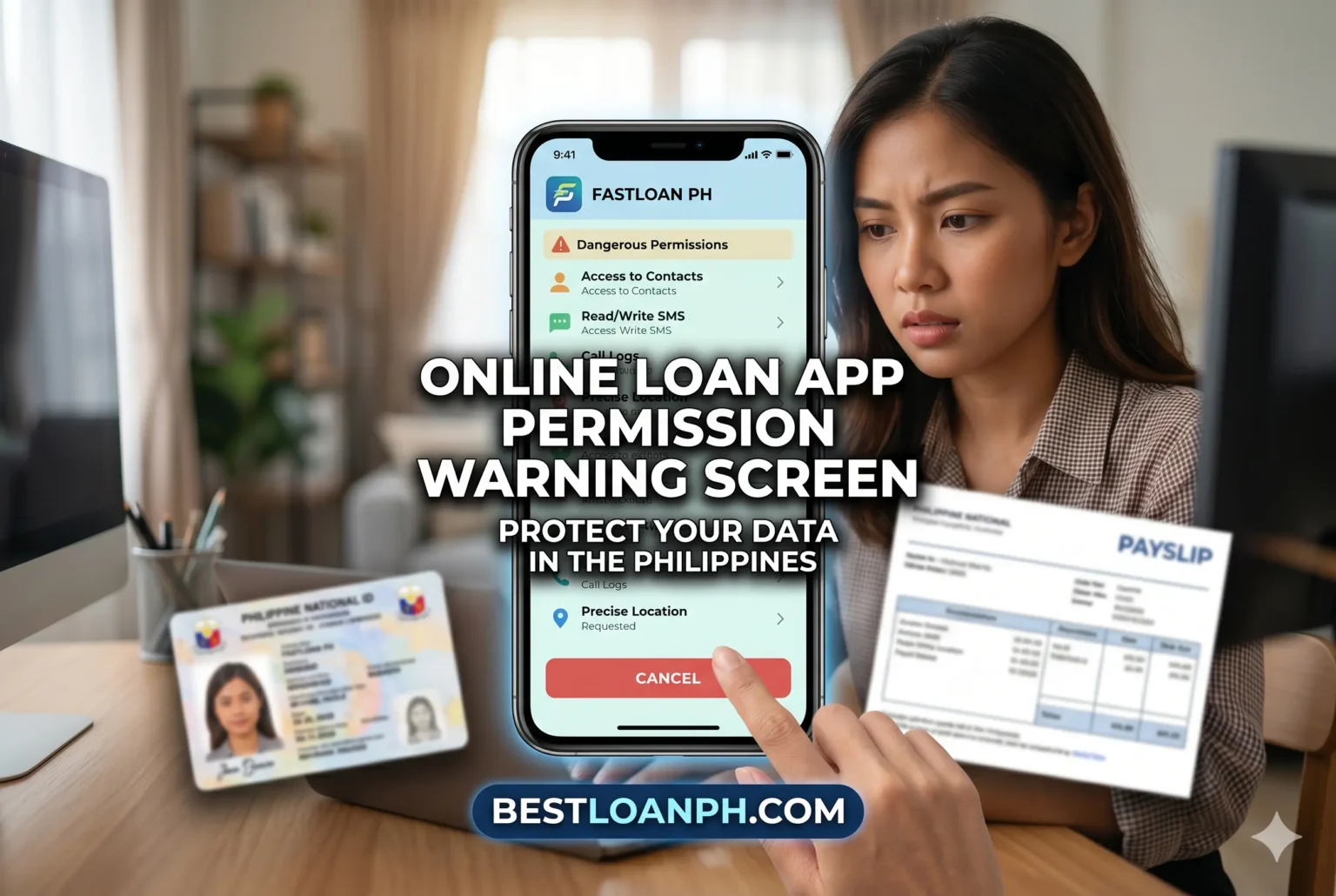
Apps Asking for Excessive Phone Permissions
One of the clearest warning signs is aggressive permission requests.
Some illegal lenders request access to:
- Full contact lists
- SMS inboxes
- Photo galleries
- Call logs
- Clipboard activity
- Device storage
While certain permissions may support fraud prevention or device verification, abusive lenders often misuse borrower data for harassment and intimidation.
In the Philippines, many complaint patterns involve collectors contacting family members, employers, classmates, or unrelated contacts after delayed repayments.
A safer lender typically limits permissions to:
- Camera access for ID verification
- Location verification when necessary
- Basic device authentication
- OTP-based mobile verification
Apps demanding broad surveillance access without clear explanations should raise concern immediately.
APK Installers Outside Official App Stores
Some borrowers receive links through Facebook Messenger, SMS, Telegram, or TikTok comments instructing them to install APK files manually.
This is extremely risky.
APK installers can bypass standard security checks found in official app marketplaces. Fraudulent APK apps may:
- Steal banking credentials
- Capture OTP codes
- Install spyware
- Clone legitimate lender interfaces
- Collect personal identity information
A safer practice is to download apps only from official marketplaces and verify:
- Developer identity
- Company information
- Reviews consistency
- Permission transparency
- Update frequency
Borrowers who install unknown APK loan apps often become targets of phishing or extortion schemes afterward.
Fake Approval SMS Messages
A growing scam pattern involves fake pre-approved loan messages.
Examples include:
- “Congratulations! Approved ka na for ₱50,000.”
- “Claim your cash today.”
- “No documents needed.”
- “Click here to receive release.”
These messages frequently redirect users to fake forms collecting:
- IDs
- selfies
- banking credentials
- e-wallet logins
- OTP codes
Legitimate lenders rarely finalize approval solely through SMS links without proper app onboarding and KYC verification.
Modern Philippine fintech systems typically use:
- facial verification
- OTP authentication
- device fingerprinting
- identity validation
- fraud scoring systems
Instant approval promises without verification are often designed to harvest data rather than provide loans.
How Legitimate Philippine Lending Apps Usually Operate
Real KYC Verification Is Normal
Many borrowers mistakenly assume strict verification means rejection risk. In reality, proper KYC processes are often signs of safer lending behavior.
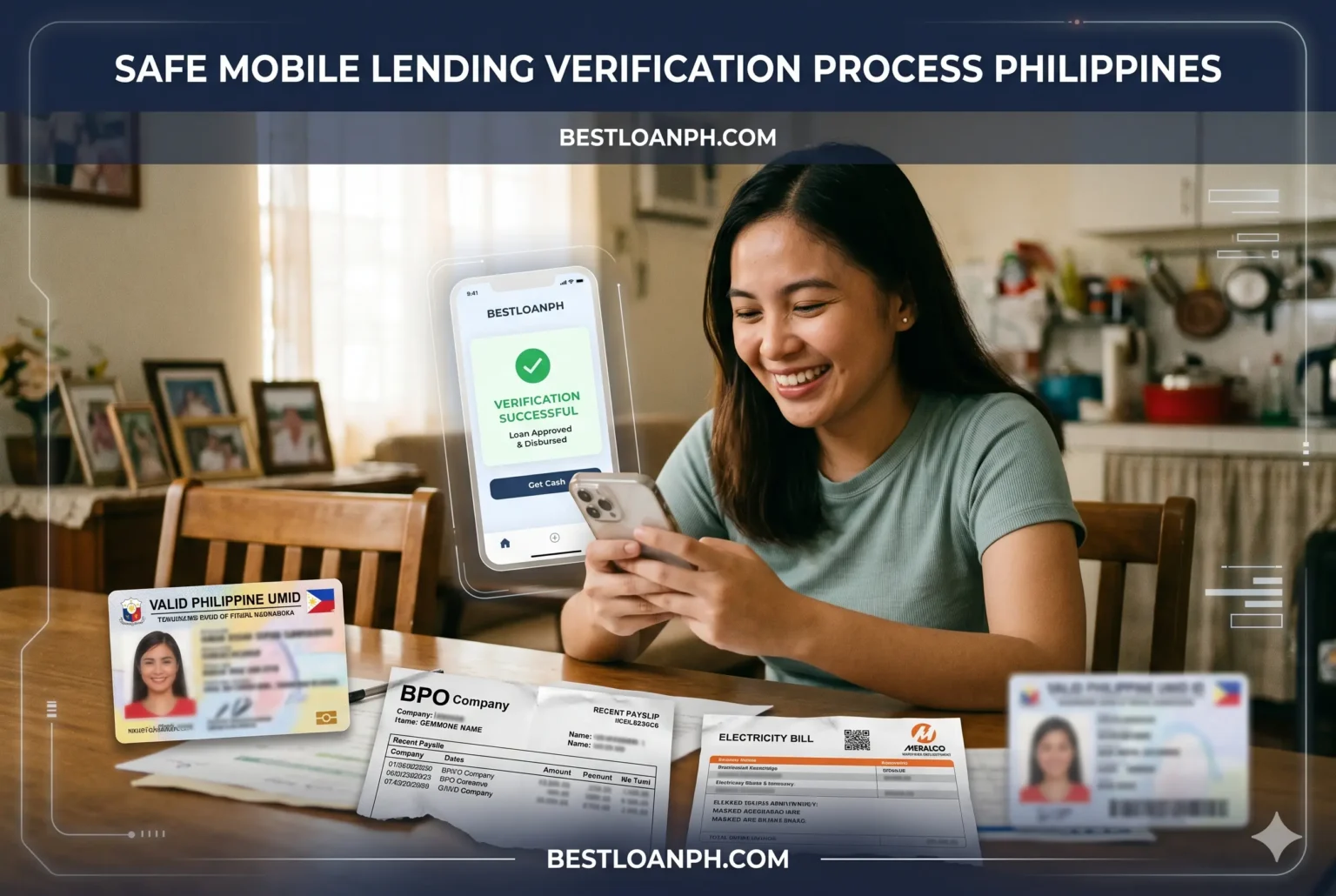
Legitimate lenders commonly request:
- Valid government ID
- Selfie verification
- Mobile number validation
- Employment or income details
- E-wallet or bank account matching
Some lenders serving freelancers, gig workers, and informal earners may accept alternative proof such as:
- GCash transaction history
- online selling activity
- remittance records
- ride-hailing earnings
- freelance invoices
Responsible fintech platforms now evaluate broader financial behavior instead of relying only on traditional payslips.
This is particularly relevant for users exploring utang online for first time borrowers, since first-time applicants often misunderstand why verification steps exist.
Transparent Fees and Repayment Terms
Safe lenders disclose:
- processing fees
- repayment schedules
- interest structures
- due dates
- penalties
- extension conditions
Dangerous apps often hide repayment details until after disbursement.
Warning signs include:
- unclear deductions
- inflated service charges
- unexplained penalties
- inconsistent repayment amounts
- collectors demanding off-platform payments
Before accepting any loan offer, borrowers should verify:
| Safety Check | Why It Matters |
|---|---|
| Repayment schedule visible before approval | Prevents hidden obligations |
| Official payment channels | Reduces fraud risk |
| Clear customer support | Indicates operational legitimacy |
| Written loan disclosures | Supports consumer transparency |
| In-app repayment tracking | Prevents collection disputes |
The Role of SEC Philippines and Data Privacy Compliance
The Securities and Exchange Commission has repeatedly issued advisories against illegal online lending operators accused of harassment, abusive collection behavior, and unauthorized data usage.
Meanwhile, the National Privacy Commission has also addressed complaints involving:
- unauthorized contact access
- public shaming
- borrower intimidation
- privacy violations
- misuse of personal information
Borrowers should understand an important distinction:
SEC Registration Alone Does Not Guarantee Perfect Behavior
Some companies may have legitimate registration but still generate borrower complaints related to collections or transparency.
However, completely anonymous lenders with no traceable company identity are significantly riskier.
A safer borrower habit is verifying:
- company name
- SEC registration details
- privacy policy availability
- customer support channels
- app store legitimacy
- complaint history patterns
Official borrower protection information can also be checked through:
⚠️ Collection Harassment: What Illegal Lenders Often Do
Contact Shaming and Threat Tactics
One of the most damaging behaviors reported by borrowers involves collectors messaging contacts from the borrower’s phonebook.
Common abusive practices include:
- sending mass messages to relatives
- threatening workplace exposure
- posting borrower photos online
- using humiliating language
- repeated midnight calls
- impersonating legal authorities
These tactics are widely associated with predatory lending behavior.
Legitimate lenders generally rely on structured collection systems involving:
- reminder notifications
- official emails
- documented repayment notices
- regulated collection processes
Threats, intimidation, or public humiliation are major warning signs.
Fake Legal Threats
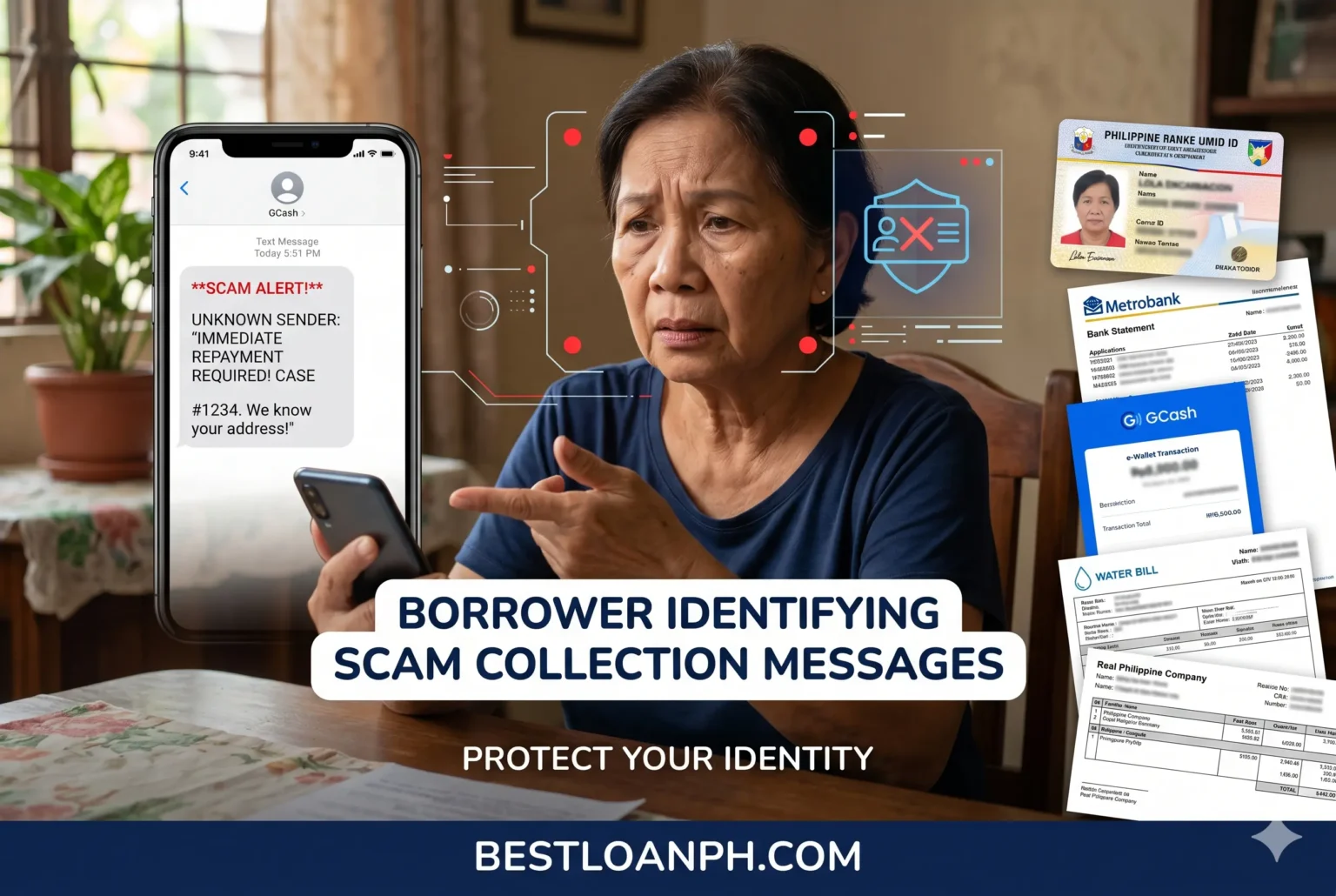
Some illegal collectors send messages claiming:
- “May warrant ka na.”
- “Ipapakulong ka namin.”
- “May kaso ka bukas.”
In many cases, these threats are designed purely to pressure borrowers emotionally.
Debt collection in the Philippines still follows legal and procedural limitations. Harassment itself can create additional liability for abusive operators.
Borrowers experiencing intimidation should preserve:
- screenshots
- SMS records
- app names
- payment history
- collector numbers
These records may help when filing complaints or reporting abusive practices.
Why Some Loan Apps Ask for Contacts
This question appears frequently in borrower complaints.
There are two very different reasons apps may request contact access.
Legitimate Fraud Monitoring
Some fintech systems use limited metadata to:
- detect synthetic identities
- reduce duplicate accounts
- identify suspicious device behavior
- improve fraud scoring
Responsible platforms typically disclose these practices clearly within privacy policies.
Abusive Social Pressure Tactics
Predatory lenders often weaponize contact data for:
- intimidation campaigns
- repayment pressure
- social embarrassment
- mass messaging
This behavior became highly controversial in Philippine digital lending discussions because borrowers reported collectors contacting unrelated people.
If an app heavily emphasizes contact permissions during onboarding without transparent justification, caution is warranted.
Practical Checklist Before Applying for Any Online Loan
Verify These Signals First
Before submitting IDs or selfies, check the following:
✅ Safer Signs
- Official app store presence
- Transparent repayment disclosures
- Real customer support
- Clear company identity
- Secure OTP verification
- Privacy policy visibility
- Professional onboarding flow
- Reasonable loan expectations
🚫 Dangerous Signs
- APK-only installation
- Guaranteed approval claims
- Upfront release fees
- Threat-based marketing
- Hidden repayment information
- Excessive permission requests
- Anonymous social media lenders
- Collectors contacting non-borrowers
Observe the App’s Actual User Experience
Experienced borrowers often identify risky apps through onboarding behavior alone.
Unsafe apps frequently show:
- broken English interfaces
- copied branding
- aggressive countdown timers
- pressure-based notifications
- suspicious redirects
- fake “limited slot” warnings
Safer fintech platforms usually present:
- structured KYC flows
- clear consent forms
- secure identity capture
- repayment calculators
- regulated disclosure screens
Modern mobile lending systems increasingly integrate:
- facial liveness detection
- AI fraud scoring
- device risk analysis
- e-wallet validation
- behavioral verification
These systems may feel stricter, but they often reduce fraud exposure for both lenders and borrowers.
Borrowers Most Vulnerable to Scam Lenders
Certain groups are more aggressively targeted by illegal operators:
- First-time borrowers
- Freelancers without formal payslips
- Gig workers
- OFW families
- Users with urgent cash needs
- Applicants repeatedly rejected elsewhere
Scam lenders exploit emotional pressure and urgency.
This becomes especially dangerous when borrowers already struggle with online loan repayment problems, making them vulnerable to rollover traps or high-pressure refinancing offers.
Predatory apps frequently target users who:
- apply late at night
- search “instant cash now”
- have poor credit histories
- rely heavily on e-wallet borrowing
Borrowers under financial stress should pause before granting app permissions or uploading identity documents impulsively.
What To Do If You Already Shared Data With a Suspicious App
Immediate Protective Actions
If you suspect you installed a risky loan app:
- Change important passwords immediately
- Monitor e-wallet activity
- Review app permissions
- Remove unnecessary access rights
- Preserve screenshots and payment records
- Avoid sending additional IDs
- Block suspicious collector numbers
- Report abusive behavior when necessary
If OTP messages or suspicious login attempts appear after installation, treat the situation seriously.
Do Not Panic During Threat Campaigns
Many borrowers become overwhelmed after receiving threatening calls or messages.
Scam operators intentionally create fear using:
- countdown threats
- fake legal claims
- aggressive collector scripts
- mass contact intimidation
Remaining calm and documenting interactions is often more effective than reacting emotionally.
Borrowers should avoid:
- sending repeated “processing fees”
- sharing additional IDs
- clicking unknown payment links
- providing banking PINs or OTPs
No legitimate lender should ask for confidential banking credentials.
Are All Online Loan Apps Legal?
No.
Some apps operate legally with proper corporate registration and lending authority. Others function through constantly changing app names, shell operators, or untraceable distribution channels.
The Philippine digital lending ecosystem includes:
- regulated fintech lenders
- financing companies
- lending corporations
- informal operators
- scam impersonators
Borrowers should not assume that appearance inside an app marketplace automatically guarantees legitimacy.
A safer approach is combining:
- regulatory verification
- permission awareness
- repayment transparency
- privacy evaluation
- borrower complaint pattern analysis
This broader trust framework is more reliable than relying only on advertising claims.
What Safe Borrowing Actually Looks Like in 2026 📱
Responsible digital borrowing today involves more than getting approved quickly.
Safer borrowers usually:
- compare repayment obligations carefully
- read privacy permissions before installation
- use official payment channels
- avoid emotional borrowing decisions
- keep repayment records organized
- borrow only manageable amounts
Legitimate fintech systems also increasingly use:
- QR-enabled repayments
- e-wallet disbursement
- facial verification
- AI-assisted fraud detection
- device identity analysis
- secure cloud-based onboarding
These trends continue shaping the Philippine mobile lending ecosystem.
Borrowers searching for safer platforms within the broader utang online philippines market should prioritize transparency and regulatory visibility over aggressive marketing promises.
Quick Safety Framework Before You Borrow
Use this simplified framework before applying:
| Question | Safe Signal | Risk Signal |
| Where was the app downloaded? | Official store | APK link |
| Are fees clearly disclosed? | Yes | Hidden charges |
| Is the company identifiable? | Transparent | Anonymous |
| Are permissions reasonable? | Limited | Excessive |
| Is collection behavior professional? | Structured reminders | Threats |
| Are support channels visible? | Verified | Missing |
| Is approval unrealistically guaranteed? | No | Yes |
If multiple risk signals appear together, reconsider the application immediately.
Conclusion
Searching for safe utang online options should never focus only on fast approval or minimal requirements. The real priority is protecting your privacy, finances, identity, and long-term financial stability.
Legitimate lenders typically show transparent repayment structures, proper verification workflows, secure onboarding systems, and clearer regulatory visibility. Scam lenders often rely on fear, urgency, hidden fees, aggressive permissions, and abusive collection behavior.
Careful borrowers pay attention to how apps behave before installation, how permissions are requested, and how repayment terms are explained. Small warning signs during onboarding often reveal larger operational risks later.
Responsible borrowing means choosing transparency over pressure, verification over shortcuts, and long-term financial safety over instant promises.
Last Updated: August 30, 2026 by The Nomad Finance Girl (Jaycee)
