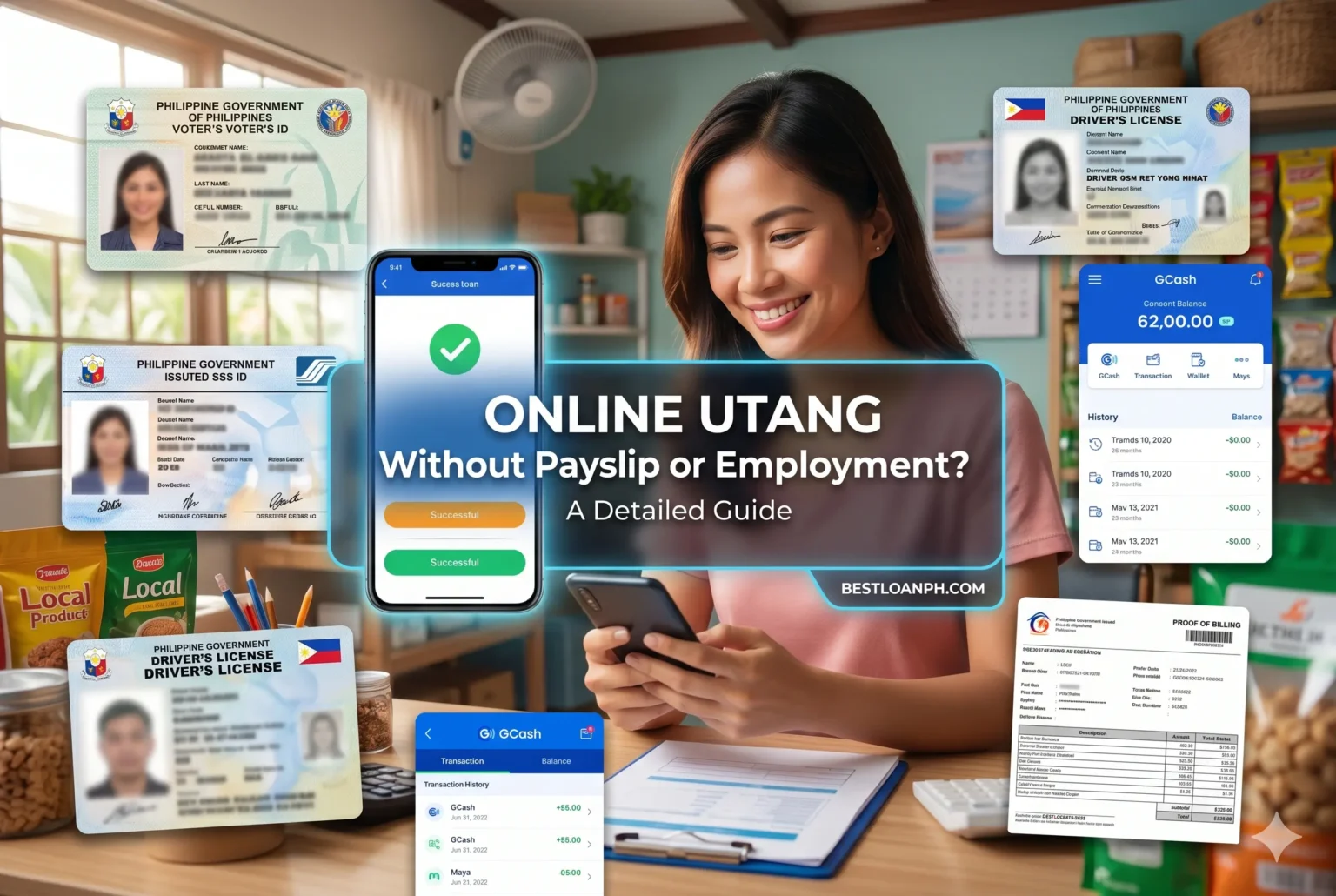
Many Filipinos earn income outside traditional office jobs. Freelancers, online sellers, delivery riders, livestream sellers, and self-employed workers often ask whether they can still qualify for utang online even without a payslip or employer certificate. The short answer is yes – but approval depends on how digital lenders evaluate your cash flow, identity consistency, repayment behavior, and alternative proof of income.
Modern lending apps in the Philippines no longer rely only on formal employment documents. Many fintech platforms now assess GCash transaction history, bank activity, remittance inflows, mobile wallet behavior, device patterns, and digital income signals. Applicants with irregular income can still qualify if they show stable financial movement, realistic repayment capacity, and truthful application details.
Summary
Applicants searching for utang online without payslip can still get approved if they provide alternative income proof such as GCash records, online selling history, remittance activity, freelance payouts, or digital bank transactions. Philippine online lenders increasingly use mobile wallet activity, device verification, selfie KYC checks, and repayment behavior to assess informal earners. Freelancers, delivery riders, TikTok sellers, and small resellers may qualify even without formal employment, but approval depends on income consistency, account authenticity, and risk evaluation. Fake income declarations, borrowed bank screenshots, and mismatched information commonly trigger automatic rejection or manual review delays.
Why Many Filipinos Apply Without a Payslip 📱
A large part of the Philippine workforce operates in the informal economy. According to labor and economic reports from Philippine government agencies and regional development organizations, millions of workers earn through freelance work, online selling, transport apps, small retail operations, and short-term gigs rather than fixed payroll employment.
This shift became more visible after the rise of:
- TikTok Shop sellers
- Facebook live sellers
- Freelance creatives
- Grab and delivery riders
- Affiliate marketers
- Remote VA workers
- Shopee and Lazada resellers
- Crypto and digital service earners
Traditional salary loans were designed for employees with monthly payslips, but digital lenders adapted because borrower behavior changed. Many fintech apps now focus on cash flow visibility rather than job titles alone.
That is why searches related to utang online philippines continue growing among borrowers who do not have conventional employment records.
How Online Lenders Evaluate Borrowers Without Payslips
Digital lenders rarely approve applications based on one document alone. Instead, many apps combine automated risk scoring with alternative underwriting signals.
Alternative Income Validation Explained
If you do not have a payslip, lenders usually look for evidence that money regularly enters your accounts.
Examples include:
- GCash incoming transfers
- Maya wallet activity
- Bank deposits
- Remittance receipts
- Freelance platform payouts
- E-commerce sales screenshots
- Delivery app earnings
- QR payment records
- Consistent transaction movement
A borrower earning ₱800 daily from deliveries may qualify more easily than someone claiming ₱40,000 monthly income without digital proof.
This is where many informal earners misunderstand the process. Approval is not based purely on declared income. It is based on whether the lender’s system can verify behavioral consistency.
Digital Cash Flow Signals Matter More Than Job Titles
Some modern lending systems analyze patterns such as:
- Average wallet balance
- Frequency of incoming transfers
- Device stability
- SIM registration consistency
- Payment history with other apps
- Existing loan behavior
- Contact authenticity
- Time using the mobile number
These are sometimes called digital cash flow signals.
For example:
- A freelancer with regular PayPal-to-bank transfers every week may appear lower-risk.
- A rider with daily GCash cash-ins may appear more stable than someone with no transaction history at all.
- A small online seller with repeated QR payments may qualify despite lacking formal employment documents.
This reflects a broader trend in informal economy lending across Southeast Asia.
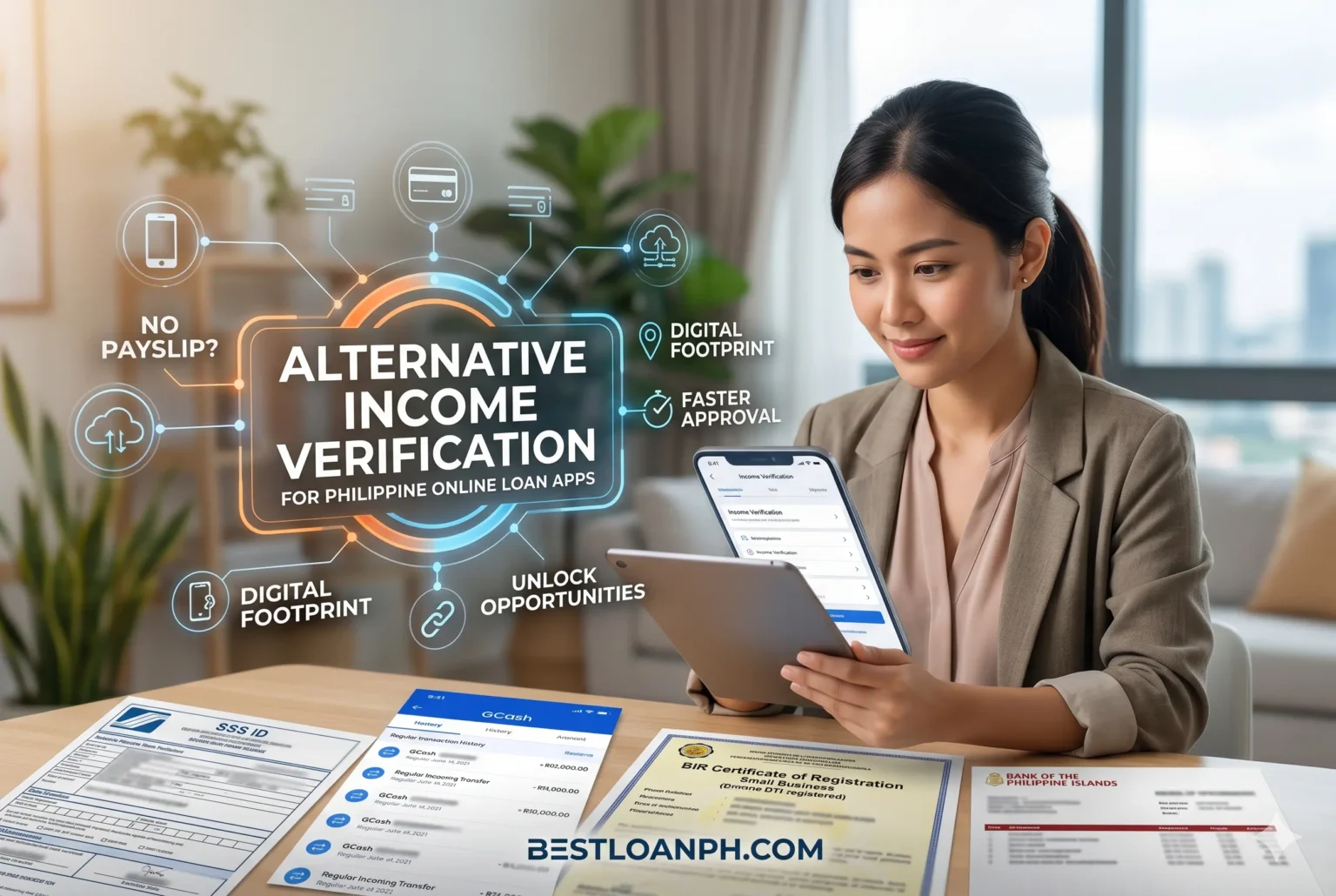
What Documents Can Replace a Payslip?
Many borrowers assume “no payslip” means “no proof needed.” That is incorrect.
Lenders still require evidence of repayment ability. The difference is that the proof can come from alternative sources.
Common Alternative Proof of Income
Depending on the lender, you may submit:
| Alternative Proof | Commonly Accepted? | Notes |
|---|---|---|
| GCash transaction history | Yes | Strong if consistent |
| Maya wallet records | Yes | Useful for digital earners |
| Bank statements | Yes | Especially recurring deposits |
| Remittance receipts | Sometimes | Helpful for OFW-supported households |
| Freelance invoices | Sometimes | Better with payment screenshots |
| Delivery app earnings | Often | Grab, Foodpanda, Lalamove |
| E-commerce sales history | Sometimes | Shopee, Lazada, TikTok Shop |
| Screenshots of payouts | Limited | Must look authentic |
| BIR registration | Helpful | Improves credibility |
| Client contracts | Sometimes | Useful for freelancers |
Applicants reviewing current utang online requirements should understand that different apps apply different risk rules. Some prioritize bank movement while others focus on mobile wallet behavior.
What Makes Alternative Proof More Credible?
Lenders often trust records more when they show:
- Consistent dates
- Recurring deposits
- Matching account names
- Stable transaction frequency
- Realistic income patterns
- Activity older than 2-3 months
Borrowers sometimes upload edited screenshots or borrowed account records. This is extremely risky because many fintech systems now use fraud-detection tools that identify altered files, metadata inconsistencies, duplicate devices, or suspicious document patterns.
False declarations may result in:
- Automatic rejection
- Blacklisting
- Manual fraud review
- Future application difficulties
Can Freelancers Get Approved?
Yes. Freelancers are among the fastest-growing borrower groups in Philippine fintech.
However, freelancers face a unique issue: income volatility.
Why Some Freelancers Get Approved Quickly
Freelancers often qualify when they can show:
- Stable client payments
- Digital bank activity
- International remittance consistency
- Long-term account usage
- Existing repayment history
Virtual assistants, designers, editors, and developers receiving regular transfers through Wise, PayPal, Payoneer, or local digital banks may appear financially stable even without formal employment.
Why Some Freelancers Still Get Rejected
Common rejection triggers include:
- Newly opened bank accounts
- Inconsistent transaction history
- Multiple simultaneous loan applications
- Unrealistic declared income
- Missing identity verification
- Device mismatch during KYC
Some borrowers apply using a different phone than the one linked to their banking apps. This sometimes raises risk flags because lenders compare device identity patterns.
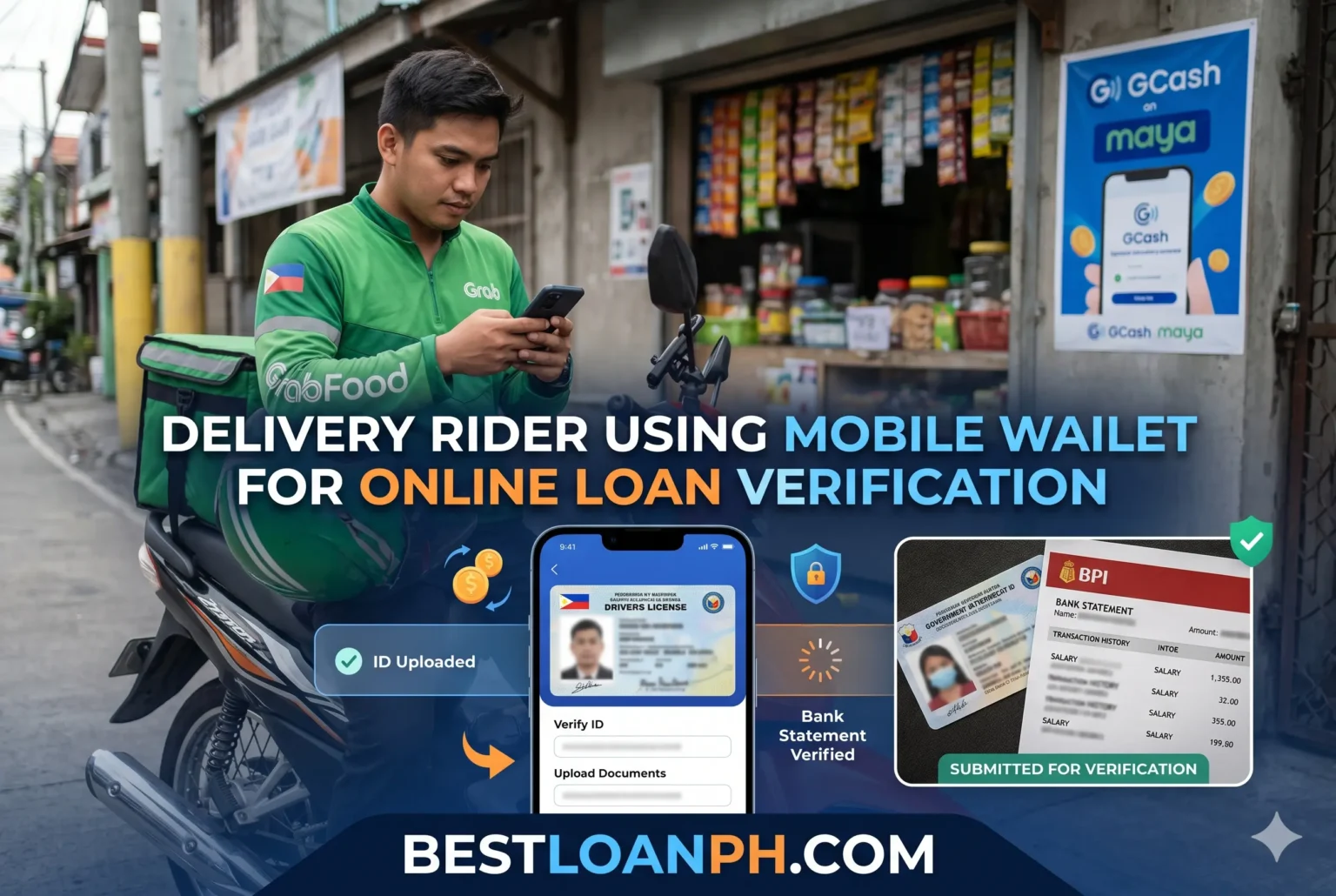
Can Delivery Riders and Gig Workers Qualify? 🛵
Delivery riders represent one of the most actively targeted borrower groups for digital lenders.
Grab riders, Foodpanda drivers, and motorcycle couriers often receive daily earnings digitally, which creates visible income movement.
What Lenders Usually Look For
Gig workers improve approval chances when they have:
- Active e-wallet transactions
- Regular cash-ins
- Verified rider accounts
- Consistent payout cycles
- Stable mobile number usage
A rider applying between payout schedules may temporarily appear lower-income if recent transactions are minimal.
That is why timing matters.
Best Time for Riders to Apply
Many gig workers unknowingly apply during low-balance periods.
A stronger application window is often:
- Shortly after weekly payouts
- After recent wallet inflows
- When account balances appear active
- After several weeks of consistent transaction history
This does not guarantee approval, but it helps the automated system detect repayment capacity more clearly.
Is GCash History Enough for Approval?
Sometimes – but not always.
GCash transaction history is now one of the strongest alternative financial signals in Philippine digital lending. However, lenders usually analyze the quality of activity rather than transaction volume alone.
Strong GCash Patterns
Helpful patterns include:
- Recurring incoming transfers
- Frequent customer payments
- Consistent wallet usage
- Utility bill payments
- QR transactions
- Stable cash flow over time
Weak or Risky Wallet Activity
Some patterns may reduce approval chances:
- Recently created wallets
- Purely outgoing transfers
- Dormant accounts
- Sudden unusually large deposits
- Multiple failed OTP attempts
- Name mismatches
Some lenders also compare wallet ownership details against submitted IDs and selfie verification.
This is why identity consistency matters heavily in mobile-first lending.
Can Remittance Activity Help?
Yes. Remittance patterns sometimes help applicants who receive regular support from relatives, OFWs, or overseas clients.
For example:
- Weekly Western Union receipts
- Monthly OFW support transfers
- International freelance payments
- Consistent bank remittances
However, lenders usually distinguish between:
- Stable recurring support
- One-time emergency transfers
Regularity matters more than occasional large amounts.
What Happens During Verification? 🔍
Many borrowers think approval happens instantly after submitting an ID. In reality, multiple backend checks occur within seconds or minutes.
Typical Verification Workflow
A digital lender may verify:
- Government-issued ID
- Selfie or facial match
- Mobile number ownership
- Device fingerprint
- SMS behavior
- Wallet activity
- Existing loan exposure
- Credit-related risk indicators
- Employment declaration consistency
Some apps also evaluate:
- Typing behavior
- GPS consistency
- App installation patterns
- Duplicate application behavior
These systems are designed to reduce fraud and identity abuse.
Why Some “No Payslip” Ads Are Misleading
Many advertisements say:
- “No income proof needed”
- “Sure approval”
- “Instant cash guaranteed”
In practice, nearly all regulated lenders still evaluate repayment ability somehow.
They may simply use:
- Alternative underwriting
- Wallet analytics
- Behavioral scoring
- AI-assisted fraud detection
Borrowers should avoid assuming that “no payslip” means “no verification.”
Real Borrower Situations Many Apps Actually Encounter
A TikTok seller with irregular earnings may still qualify because customer payments arrive consistently through GCash every week.
A Grab rider with active wallet inflows may get approved faster than a formally employed worker with poor repayment history.
A reseller without bank statements may still pass verification if e-wallet activity and QR transactions appear stable over several months.
Meanwhile, an applicant claiming high income but showing empty wallets, inactive accounts, or inconsistent identity records often faces automatic rejection.
These patterns reflect how fintech underwriting increasingly focuses on behavior rather than traditional employment labels.
Borrower Mistakes That Commonly Cause Rejection ❌
Fake Screenshots and Edited Documents
One of the fastest ways to fail verification is uploading altered income proof.
Modern fintech systems increasingly detect:
- Cropped screenshots
- Edited balances
- Duplicate transaction images
- Metadata inconsistencies
Some apps also conduct manual reviews for suspicious uploads.
Applying to Too Many Apps at Once
Multiple applications within a short period can create risk signals.
This behavior sometimes suggests:
- Financial distress
- Loan stacking
- Fraud attempts
Spacing applications responsibly may reduce unnecessary rejection risk.
Using Unverified Contact Information
Applications become weaker when:
- SIM registration details differ
- Names mismatch across accounts
- Contact references are unreachable
- IDs appear blurry
Many applicants underestimate how strict KYC verification has become after BSP-supported digital identity and fraud-prevention improvements.
How to Improve Approval Chances Without Formal Employment ✔️
Build Digital Financial Consistency
Before applying:
- Use one main e-wallet consistently
- Maintain active transactions
- Avoid frequent account switching
- Keep your ID updated
- Use your real legal name across platforms
This helps automated systems establish behavioral reliability.
Declare Realistic Income
Inflated income claims often backfire.
A borrower earning ₱12,000 monthly with visible consistent transactions may appear safer than someone claiming ₱50,000 without proof.
Prepare Multiple Verification Options
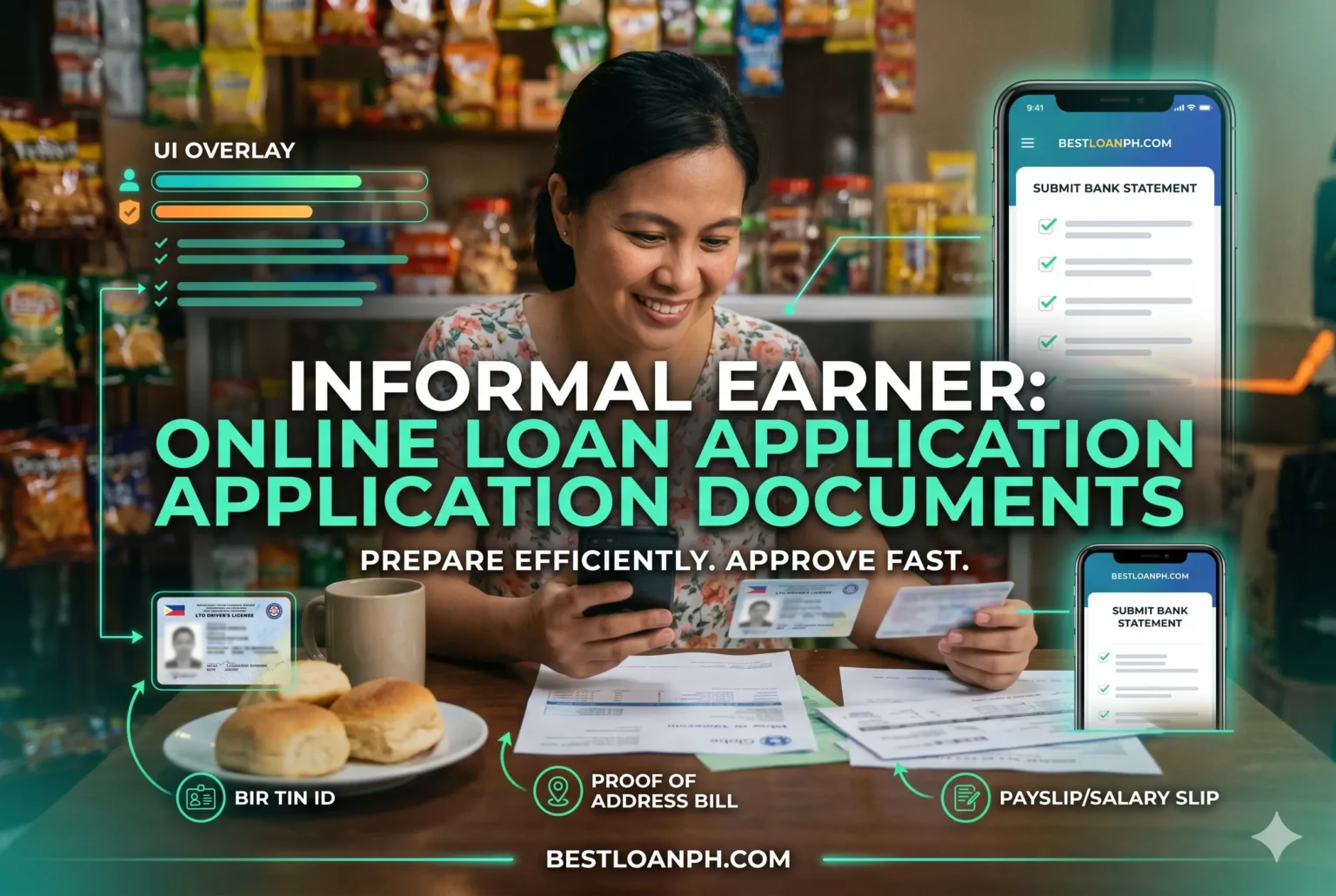
Strong applicants often prepare:
- Wallet screenshots
- Bank activity
- Remittance receipts
- Freelance invoices
- Selling platform records
This reduces delays during manual review.
Applicants researching how fast online loan release works should know that incomplete or inconsistent verification usually slows disbursement more than the lender’s advertised processing time.
Safe Borrowing Reminders for Informal Earners 🛡️
Not all online lenders operate responsibly. Some borrowers focus only on approval speed and overlook security risks.
Before applying:
- Verify SEC registration
- Read repayment terms carefully
- Avoid apps demanding excessive contacts access
- Review interest disclosures
- Check privacy permissions
- Understand penalties and rollover costs
The Philippines has seen increasing enforcement actions against abusive online lending behavior and unauthorized collection practices.
Reading practical safe online borrowing tips can help borrowers avoid predatory lending traps.
You should also review official borrower protection information from Bangko Sentral ng Pilipinas (BSP) and the Securities and Exchange Commission Philippines (SEC) before sharing sensitive information with lending apps.
Can Unemployed Users Still Get Approved?
Technically yes – but “unemployed” does not always mean “without income.”
Some applicants have no formal employer yet still receive:
- Online selling income
- Family business earnings
- Remittances
- Freelance payouts
- Commission-based income
Approval becomes difficult mainly when applicants cannot demonstrate any stable repayment source.
Lenders prioritize ability-to-pay signals rather than employment labels alone.
Are Bank Statements Better Than Payslips?
In some digital lending systems, yes.
A stable bank statement showing recurring deposits may carry more practical value than a low formal salary with weak transaction behavior.
Especially for informal earners, lenders increasingly prefer:
- Real cash movement
- Consistent digital activity
- Verified account ownership
- Historical financial patterns
This reflects broader fintech movement toward alternative underwriting models.
Why Informal Earners Are Becoming Important to Fintech Lenders
Philippine fintech companies increasingly compete for underserved borrowers.
Traditional banking systems often exclude:
- Freelancers
- Gig workers
- Self-employed sellers
- Small digital entrepreneurs
Online lending platforms attempt to fill this gap using:
- AI-based scoring
- Mobile wallet analysis
- Behavioral data
- App-based onboarding
This shift explains why the market for utang online without payslip continues expanding.
However, approval flexibility does not eliminate borrower responsibility. Informal earners still need realistic repayment planning.
Conclusion
Getting approved for utang online without payslip is possible in the Philippines, especially for freelancers, delivery riders, online sellers, and other informal earners with visible digital financial activity. Modern lenders increasingly assess GCash movement, bank transactions, remittance patterns, and behavioral consistency instead of relying only on traditional employment records.
Still, approval is never guaranteed. Honest declarations, identity consistency, stable transaction behavior, and responsible borrowing habits matter far more than exaggerated income claims or edited screenshots. Borrowers should prepare legitimate alternative proof, avoid rushing multiple applications, and carefully evaluate lender credibility before sharing personal data.
As Philippine fintech systems evolve, alternative underwriting continues expanding access for informal workers – but safe borrowing and realistic repayment planning remain essential for long-term financial stability.
Last Updated: August 29, 2026 by The Nomad Finance Girl (Jaycee)
