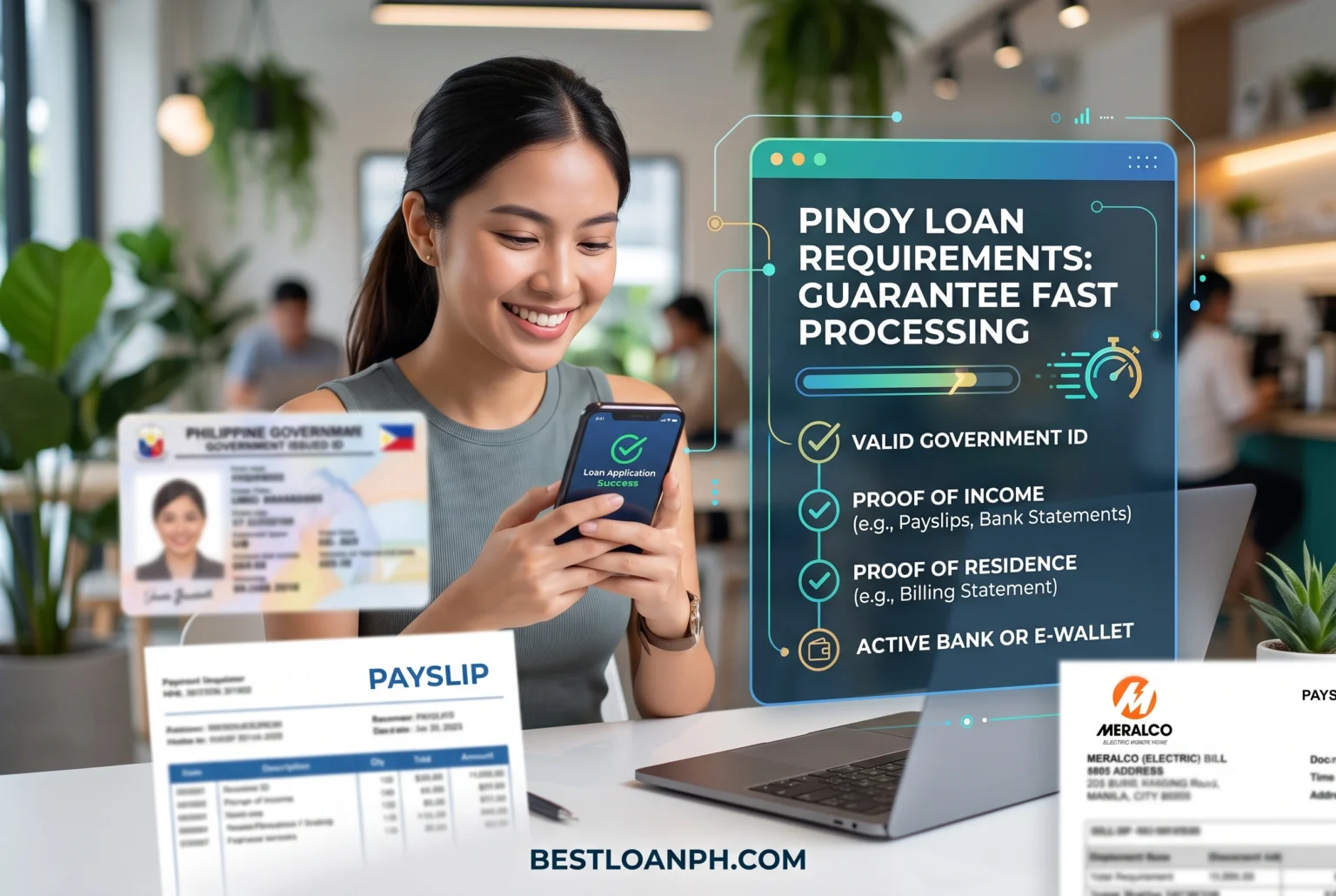
It is incredibly frustrating to urgently need funds, finally decide to apply for a loan, and then get hit with a confusing wall of paperwork demands. If you are feeling overwhelmed by the endless lists of required documents, you are completely normal. Many applicants worry that a single missing paper or a mismatched address will result in an automatic rejection, keeping them locked out of financial relief. Let’s clear that up right now: you do not always need a perfect stack of traditional paperwork to get approved. The reality is that Philippine lenders just want to confirm two basic things: you are who you say you are, and you have a reliable way to pay them back.
Summary:
Getting approved for a personal loan in the Philippines requires a mix of identity and income verification. Generally, applicants must present at least one primary government-issued ID (like a Passport, UMID, or PhilSys ID) and solid proof of income. For traditional employees, this means a Certificate of Employment (COE), latest payslips, and a BIR Form 2316. Self-employed individuals and freelancers must provide bank statements, business permits, or an ITR. Preparing exactly what your specific lender demands, and ensuring all details match across your documents, is the single best way to avoid delays and automatic rejections.
Key Takeaways: Document Preparation by Employment Type
| Employment Type | Proof of Identity Needed | Core Income Documents Required | Secondary / Verification Documents |
| Locally Employed | 1 Primary ID (eKYC preferred) | 1-month latest payslip, COE with compensation | BIR Form 2316, Company ID |
| Self-Employed / Business | 1 Primary ID + DTI/SEC Reg | Audited Financial Statements, ITR (Form 1701) | 3-6 months bank statements, Trade references |
| Freelancers / Gig Workers | 1 Primary ID | 3-6 months bank statements, ITR (if registered) | Upwork/PayPal certificates, Client contracts |
| OFWs | 1 Primary ID (Passport) | POEA Verified Contract, Proof of Remittance | Consularized employment certificate |
Which Primary Valid IDs Do Philippine Banks Actually Accept?
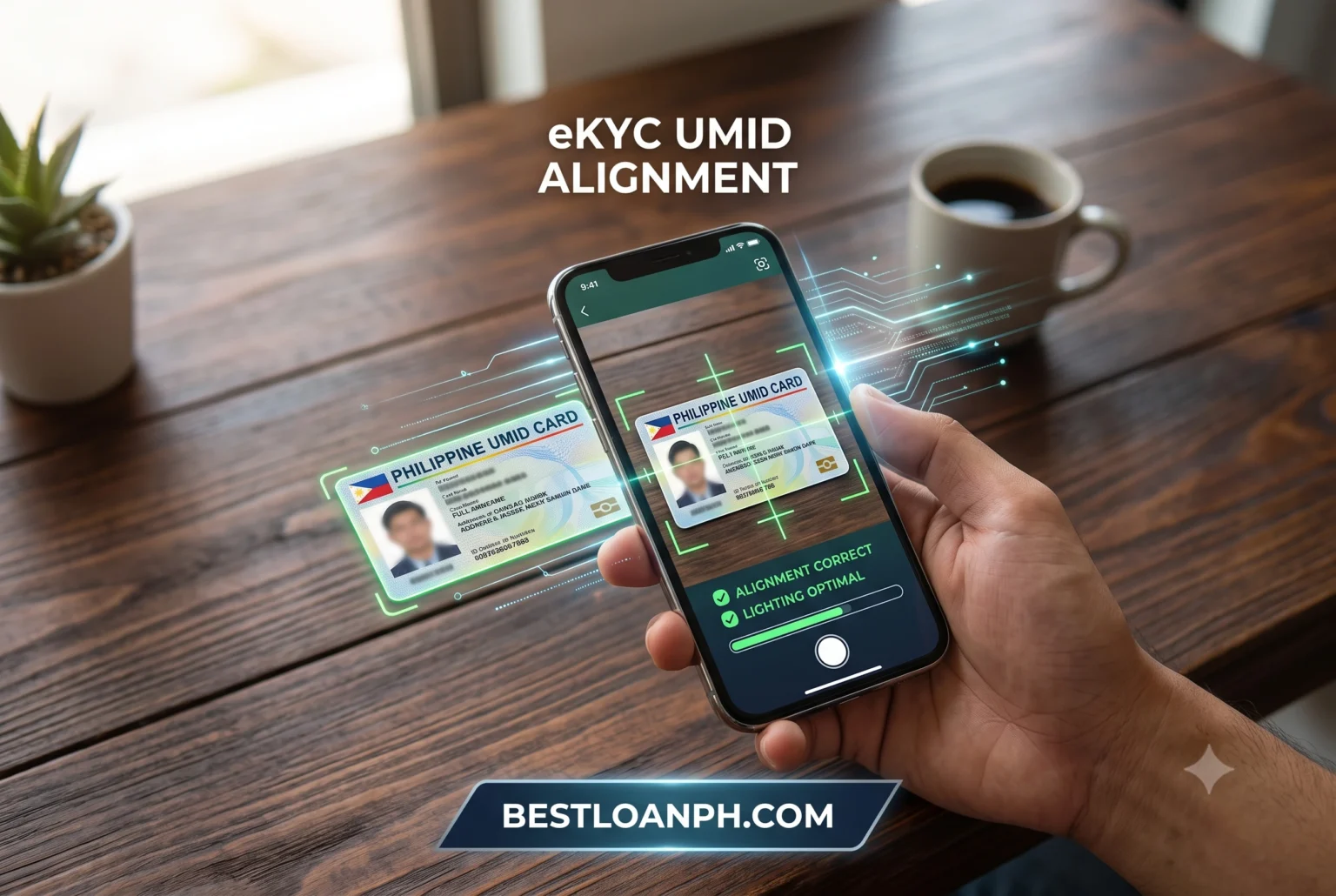
Philippine banks and digital lenders strictly require at least one primary, government-issued ID to satisfy the Bangko Sentral ng Pilipinas (BSP) Know Your Customer (KYC) regulations. The most universally accepted IDs are the Philippine Passport, UMID, Driver’s License, and the PhilSys ID (National ID).
When our team tested various digital loan apps and traditional bank portals earlier this year, we noticed a significant difference between what is legally accepted and what the automated systems easily process. While the BSP mandates acceptance of the PhilSys ID, many legacy banking systems still struggle to scan the physical card’s QR code accurately.
If you want the fastest processing, stick to the “Big Three”: a Passport, a Driver’s License, or a UMID.
A major friction point we see constantly involves automated eKYC (electronic Know Your Customer) software. If you are uploading a photo of your ID via a smartphone app, lighting is your biggest enemy. We have watched automated systems from digital lenders reject perfectly valid UMID cards simply because a ring light caused a glare on the plastic lamination, or because the edges of the card were cropped out of the frame. If this happens, your application gets kicked to a human reviewer, turning a 5-minute approval into a 24- to 48-hour wait. Always place your ID on a flat, dark surface in natural daylight before taking the photo.
How Can I Prove My Income if I Am Locally Employed?
Locally employed applicants must prove their earning capacity by submitting their latest Certificate of Employment (COE), payslips from the last one to three months, and their most recent BIR Form 2316. These documents confirm your tenure, exact salary, and tax compliance.
Banks view traditional employment as the safest bet, but they are incredibly meticulous about the details. Your Certificate of Employment cannot just say you work there; it must explicitly state your annual compensation, your position, and your date of hire. Lenders want to see that you are a regularized employee. If your COE indicates you are still in a probationary period, your chances of approval drop significantly.
Make sure your income documents tell a consistent story. If your payslip shows a base pay of ₱30,000 but your COE includes allowances that bump it to ₱35,000, some strict credit analysts might flag the discrepancy. Always ask your HR department to break down your basic salary versus allowances clearly on the COE.
How Do Banks Conduct HR Verification Calls in the Philippines?
Banks conduct HR verification calls by dialing the official company landline listed on your application or Google, asking the HR representative to confirm your employment status, job title, and tenure. They rarely verify exact salary figures over the phone due to data privacy restrictions.
This is a step where many applications secretly die. In our experience working alongside credit evaluation teams, banks do not just call the mobile number you wrote down for your manager. They search for your company’s official corporate registry or website and call the public landline. If your company only uses mobile phones or operates entirely remotely without a centralized directory, the bank might mark your application as “Unable to Verify.”
Here is exactly what a standard HR verification call covers:
- Identity Check: “Do you have an employee named [Your Name]?”
- Status Check: “Are they a regular, full-time employee?”
- Tenure Check: “Did they start working in [Month, Year]?”
- Red Flag Check: “Are there any pending administrative cases against this employee?”
If you work for a BPO with a strict “no verbal verification” policy, you must request a specific verification email address from your HR department and provide that proactively to your loan officer.
What Are the Personal Loan Options for Freelancers Without a Payslip?
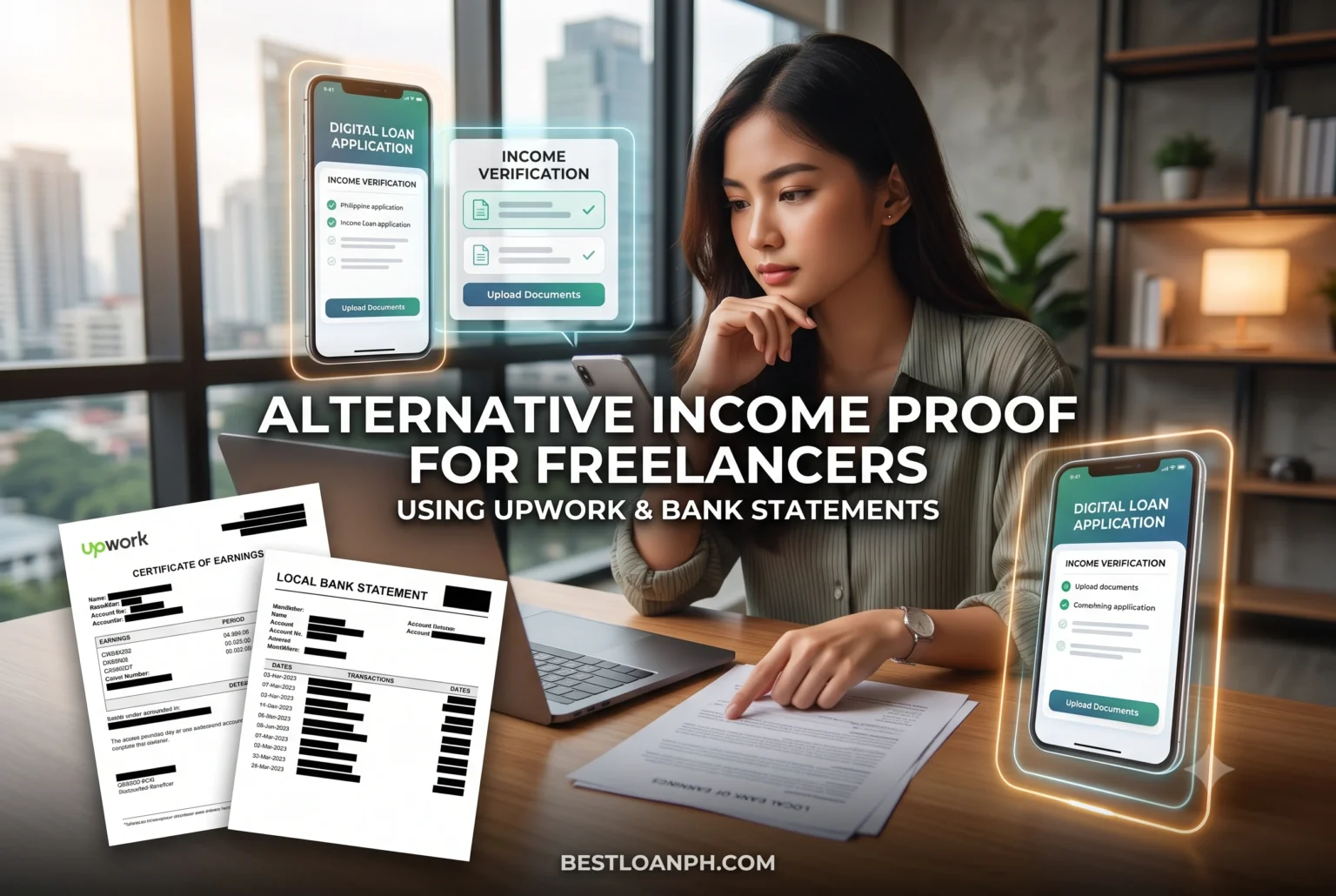
Freelancers can secure personal loans by submitting alternative income proofs such as three to six months of active bank statements, an Income Tax Return (ITR 1701 or 1701Q), and digital platform earnings certificates (like Upwork or PayPal summaries).
The traditional banking system in the Philippines was not built for the gig economy. But that is slowly changing. If you are looking for a personal loan for freelancers without a payslip, you have to think like a risk analyst. They cannot rely on a company HR department to vouch for you, so your cash flow has to do the talking.
If you are an unregistered freelancer (meaning you do not have an ITR), your options at major commercial banks will be limited. You will have better luck exploring Philippine personal loan options offered by digital banks and SEC-registered fintech apps.
When our researchers applied for credit lines as freelancers, we found that maintaining a high Average Daily Balance (ADB) in a digital bank account over six months was highly effective. Platforms like Maya Bank or CIMB often issue pre-approved loan offers based entirely on your transaction history within their ecosystem, completely bypassing the need for a physical payslip or an ITR. If you are uploading bank statements, do not edit the PDF. Lenders use software to detect PDF tampering, and any modification will result in a permanent ban.
What Happens if My Billing Address Doesn’t Match My Current Residence?
If your proof of billing does not match your current address, you must provide a Barangay Certificate of Residency, a valid lease contract in your name, or a utility bill in someone else’s name accompanied by an authorization letter and a copy of their ID.
Renting in Metro Manila or Cebu often means the electricity and water bills remain under the landlord’s name. Banks understand this reality. If you hand over a Meralco bill registered to “Juan Dela Cruz” while your name is “Maria Santos,” the bank will pause your application.
To resolve this smoothly, write a simple letter stating that you are renting the property owned by Juan Dela Cruz. Attach a photocopy of his ID with his signature, along with your lease agreement. Alternatively, you can request your bank to send your latest credit card or debit card statement to your current address and use that physical letter as your proof of billing. It is a very effective workaround that takes advantage of your existing banking relationship.
Can I Apply for a Personal Loan With Only One Valid ID?
Yes, you can apply for a personal loan with just one valid primary ID, especially when using digital banks and authorized online lending apps, which rely on single-ID eKYC verifications and alternative credit scoring models.
The days of needing a binder full of photocopied documents are fading. Many modern digital lenders only ask for one primary ID and a selfie. However, be cautious. If a lender is willing to hand over cash with zero income checks and just one ID, they are offsetting that massive risk by charging astronomical interest rates.
If you only have one ID but want standard bank rates, you should apply through a bank where you already have an active savings or payroll account. Because they already performed a thorough KYC check when you opened the account, they will often waive the multi-ID requirement for a loan application.
Securing Your Approval and Protecting Your Financial Health
Preparing your personal loan requirements does not have to be a blind guessing game. By understanding exactly what banks are looking for—clear identity verification, stable income history, and consistent documentation—you can eliminate the friction points that lead to most rejections. Take the time to ensure your IDs are clear, your certificates are updated, and your HR department is ready to answer the phone.
Remember, taking on a loan is a serious commitment. Only borrow what you can realistically repay within your monthly budget, and always read the disclosure statement to understand the true cost of borrowing, including the effective interest rate (EIR) and any hidden processing fees. Legitimate lenders will never ask you for an “advance processing fee” before releasing your funds. Keep your personal data safe, submit your requirements confidently, and take control of your financial journey.
References
- Bangko Sentral ng PilipinasOrganization: BSPResource: Valid Identification Documents for Financial TransactionsURL: https://www.bsp.gov.ph/Pages/InclusiveFinance/ValidIDs.aspx
- Securities and Exchange Commission PhilippinesOrganization: SECResource: Lending Company Regulation and Borrower ProtectionURL: https://www.sec.gov.ph/lending-companies-and-financing-companies/
- National Privacy CommissionOrganization: NPCResource: Data Privacy Guidelines for Lending ApplicationsURL: https://www.privacy.gov.ph/lending-apps-privacy-guidelines/
Last Updated: August 23, 2026 by The Nomad Finance Girl (Jaycee)
