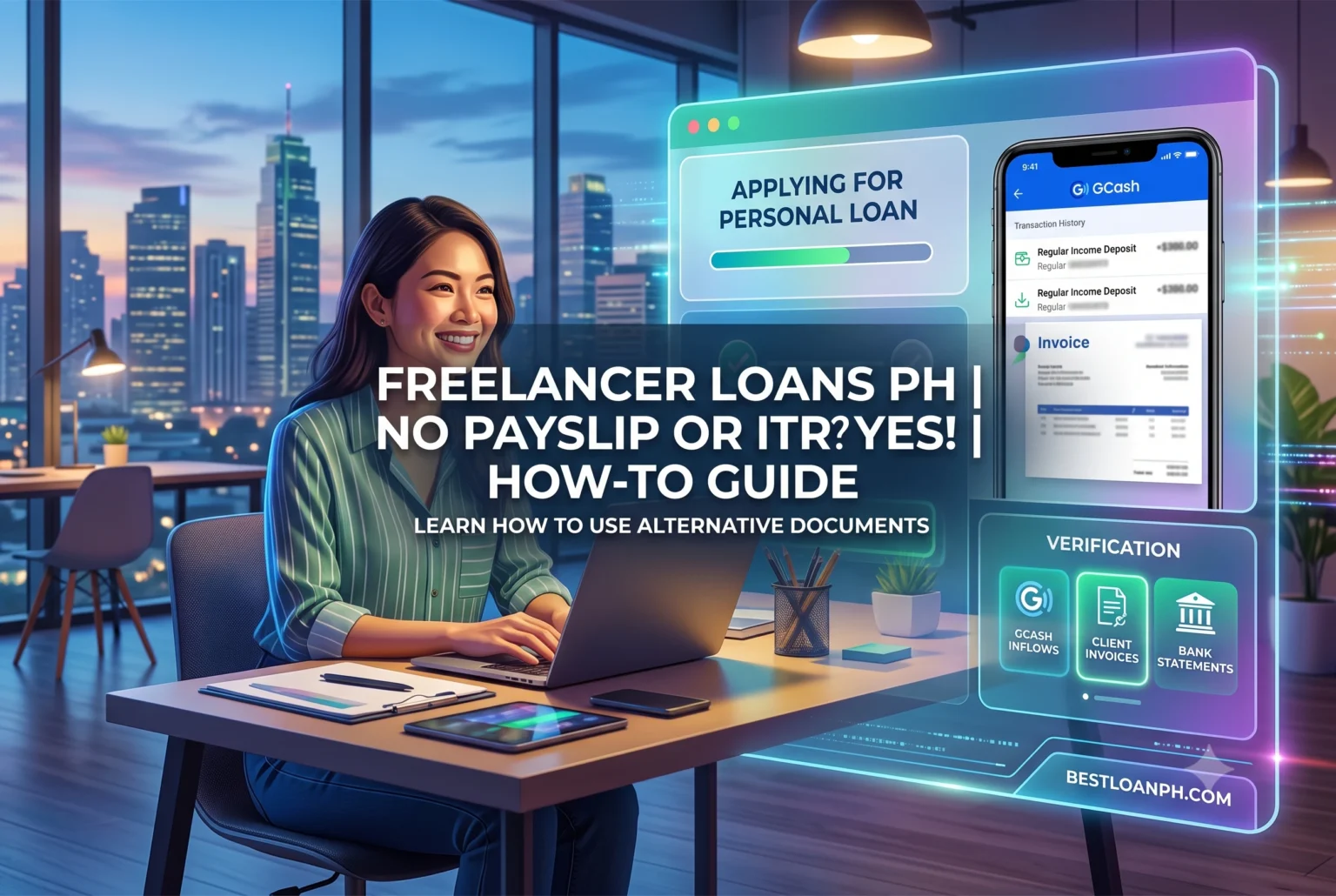
You are earning PHP 80,000 a month as a virtual assistant, managing international clients, and paying your bills on time. Yet, when you walk into a traditional bank branch to finance a much-needed laptop upgrade, the loan officer looks at your application and treats you as if you have zero income. The immediate rejection simply because you lack a corporate payslip or BIR Form 1701 is a distinctly isolating and frustrating experience. We see this constantly in the local fintech space. You are earning legitimate money, but legacy financial institutions operate on rigid, paper-based verification systems that fail to recognize the modern gig economy. The good news is that proving your creditworthiness without standard documentation is entirely possible if you understand how digital lenders evaluate alternative cash flow.
Summary: Securing a personal loan for freelancers philippines requires actively routing gig platform payouts from PayPal or Payoneer into a single local bank account to build a verifiable six-month transaction history. Regulated digital banks like Tonik, CIMB, and Maya analyze this alternative cash flow data to approve credit lines without demanding traditional ITRs or corporate payslips.
| Key Takeaways | Actionable Insight |
| Centralize Cash Flow | Avoid scattering your freelance payouts across multiple e-wallets. Funnel all Upwork or direct client payments into one primary digital bank account. |
| Alternative Verification | Lenders accept consistent, six-month bank statements showing foreign remittance deposits in place of traditional corporate payslips. |
| Platform-Specific Data | Upwork Certificates of Earnings and active DTI business registrations carry significant weight during manual underwriting processes. |
| Beware of eKYC Friction | Make sure your primary IDs (Passport, UMID, Postal ID) are pristine. Digital banks often reject applications due to automated ID glare or faded text. |
Why Do Traditional Banks Reject Freelancers for Personal Loans in the Philippines?
Traditional Philippine banks reject freelancers because their automated risk models require standard personal loan requirements like corporate payslips and ITRs to verify income stability, which independent gig workers structurally lack.
When we analyze legacy banking operations, the rejection is rarely personal; it is entirely algorithmic. Traditional banks operate under strict Bangko Sentral ng Pilipinas (BSP) risk mandates designed for a 9-to-5 workforce. A traditional loan officer types your details into a legacy system that evaluates your debt-to-income ratio based strictly on gross pay figures extracted from BIR Form 2316 or physical corporate payslips.
Without these documents, the system assigns a zero-income value to your profile. Traditional lenders do not possess the digital infrastructure to instantly scrape or verify your Upwork billing history or your Payoneer wallet balance. From a risk assessment perspective, undocumented income is viewed as volatile and highly prone to default. They view a graphic designer earning PHP 150,000 via direct crypto or PayPal transfers as a higher risk than a corporate employee earning PHP 25,000 with a physical payslip. Understanding this systemic limitation is your first step toward finding lenders who actually utilize alternative credit scoring.
What Alternative Income Documents Can I Use to Prove My Cash Flow?
You can prove freelance income by generating an Upwork Certificate of Earnings, registering as a self-employed professional with the DTI, and consistently routing international payouts into a single local bank account for six months.
Since you cannot submit standard personal loan requirements, you must engineer your own paper trail. In our experience testing application flows across multiple digital lending platforms, raw PayPal statements or screenshots of foreign e-wallets are almost universally rejected. Fintech companies require a localized, regulated paper trail.
Here is the exact operational workaround to convert gig income into acceptable bank documentation:
- The Single-Account Consolidation Strategy: Choose one local bank account (UnionBank and digital banks like CIMB or SeaBank are highly freelancer-friendly) and route 100% of your client payments there. If a client pays you via Wise or Payoneer, transfer the funds immediately to this chosen local account.
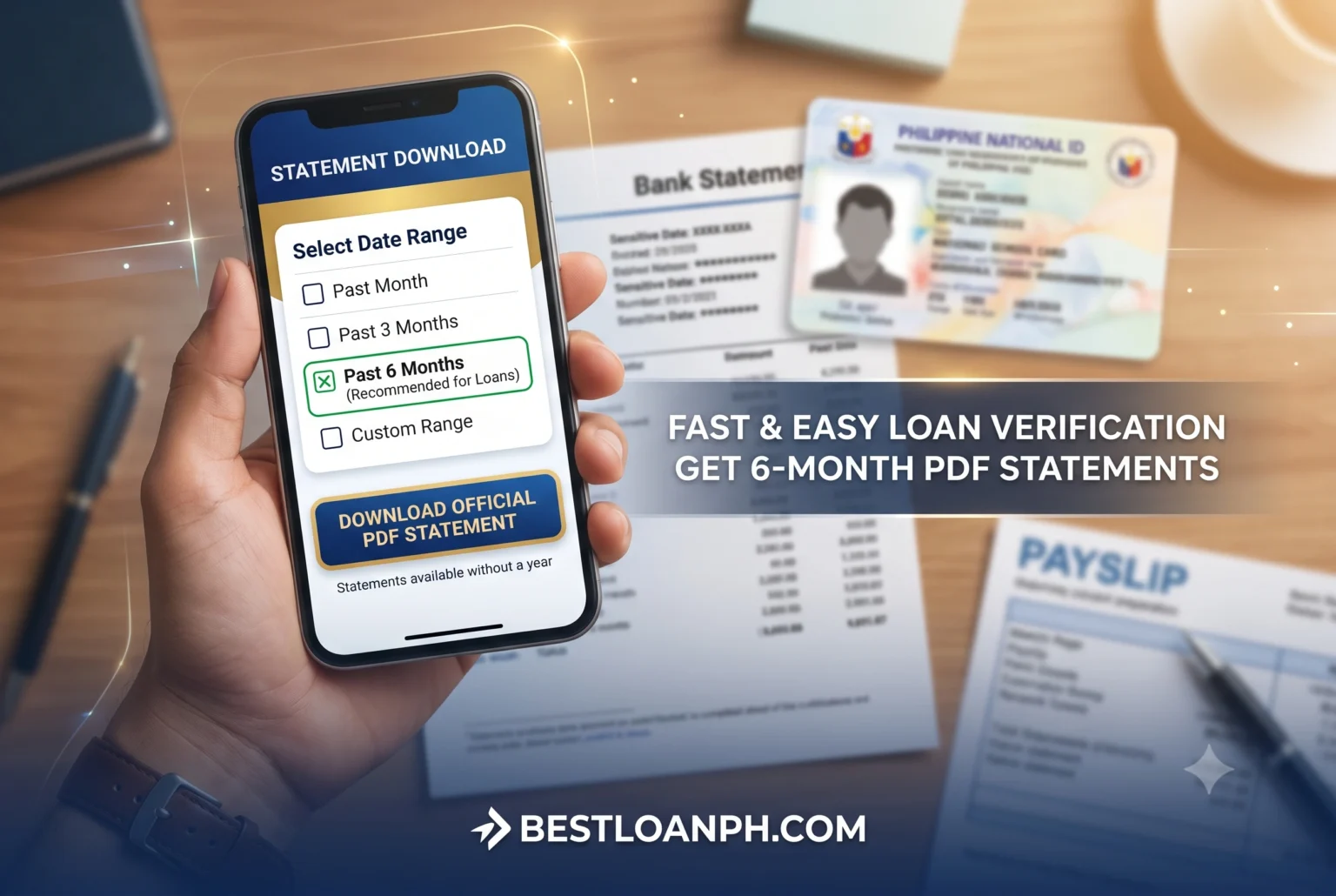
- Wait for the Six-Month Mark: Generate the bank statement directly from your banking app only after six continuous months of regular deposits. Lenders look for the consistency of the deposit tags (e.g., “Remittance from Payoneer” or “InstaPay from Wise”).
- Upwork and Platform Certificates: Upwork allows you to download a Certificate of Earnings that details your total billed hours and income over specific periods. While not a payslip, human underwriters at progressive lending apps treat this as verifiable proof of active contract work.
- DTI Business Name Registration: For less than PHP 1,000, you can register your freelance services as a business entity with the Department of Trade and Industry. A DTI certificate shifts your classification from “unemployed” to a “sole proprietor,” immediately opening doors to micro-business loans.
Which Digital Banks Offer Personal Loans for Freelancers in the Philippines?
Digital lenders like Tonik, CIMB, and Maya provide the most accessible personal loans in the Philippines for freelancers by bypassing traditional paperwork and analyzing your in-app cash flow and transactional behavior to assign a credit limit.
If you have a strong, documented cash flow using the strategies outlined above, you should target regulated digital banks. When our team tested these applications, we observed specific friction points and operational quirks that you must navigate.
Applying for personal loans in the Philippines via digital platforms relies heavily on their proprietary algorithms:
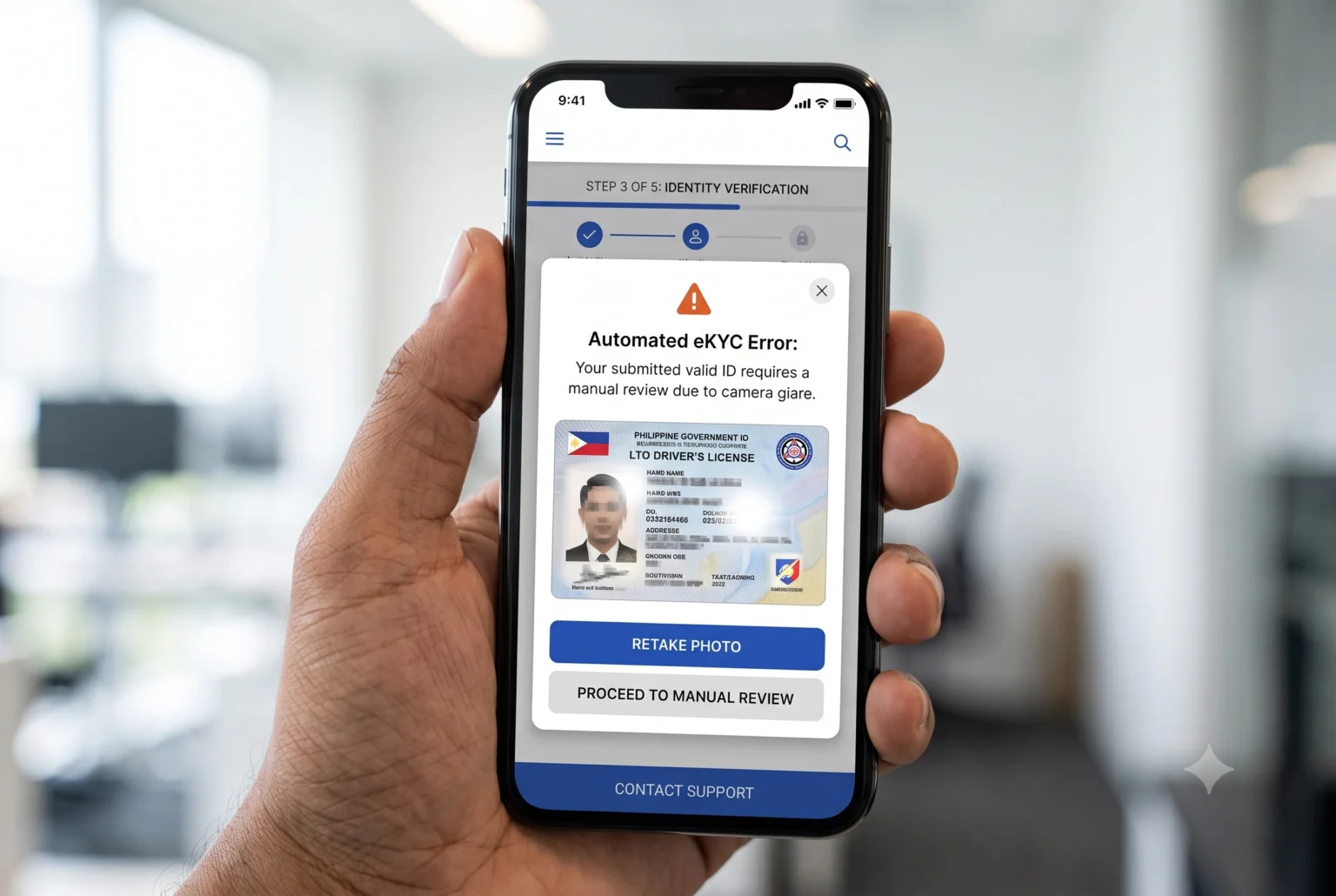
- Tonik Bank (Quick Loan): Tonik relies heavily on alternative credit data. You can apply directly through the app. Friction Point: During our testing, we found that their automated eKYC system is highly sensitive to ID glare. Ensure you are in a well-lit room when scanning your UMID or Passport, as manual reviews caused by blurry photos can delay disbursement by up to 48 hours. Tonik evaluates your stated income against your internal Tonik Stash activity.
- Maya (Maya Personal Loan / Maya Credit): Maya does not require you to upload any income documents if you are an active user. They assign a credit score based on your wallet activity—specifically, how often you pay bills, buy load, or receive funds into your Maya account. Friction Point: Simply cashing in and cashing out immediately does not build a strong Maya credit score; the algorithm favors users who keep a resting balance and actively use the app for payments.
- CIMB (REVI Credit & Personal Loan): CIMB is aggressive in acquiring non-traditional borrowers. If you maintain a GSave account (linked via GCash) or an UpSave account, CIMB monitors your average daily balance over time. After establishing a consistent deposit history, they frequently send pre-approved loan offers via SMS or in-app notifications, completely eliminating the need for an ITR.
How Do I Calculate the Real Cost of Borrowing as a Freelancer?
Freelancers must calculate the Effective Interest Rate to understand the true financial cost of a loan, as processing fees and hidden charges frequently make the nominal monthly interest rate appear deceptively cheap.
Gig workers often fall into a debt trap by only looking at the advertised monthly add-on rate. Digital lenders often market a seemingly low 1.5% monthly interest rate, but when you factor in the 5% processing fee deducted upfront and the specific compounding schedule, the actual cost of borrowing skyrockets.
To evaluate a loan offer safely, you must look beyond the marketing material and analyze the Effective Interest Rate (EIR). The BSP requires all legitimate lenders to disclose this figure. The EIR reflects the true annual cost of the loan.
The standard calculation for an effective rate involving compounding periods is represented by the formula:

Where $r$ is the nominal interest rate and $n$ is the number of compounding periods per year. Do not let complex calculations intimidate you; always demand the disclosure statement before tapping “Accept” on your mobile device. If a lending app hides their processing fees until the very last page or refuses to show a clear amortization schedule, cancel the application immediately. Stick strictly to SEC-registered and BSP-regulated platforms to ensure your data and your finances remain protected.
References
- Bangko Sentral ng PilipinasOrganization: BSPResource: Financial Inclusion Dashboard and E-Money RegulationsURL: https://www.bsp.gov.ph/SitePages/InclusiveFinance/InclusiveFinance.aspx
- Securities and Exchange Commission PhilippinesOrganization: SECResource: List of Registered Lending CompaniesURL: https://www.sec.gov.ph/lending-companies-and-financing-companies-2/list-of-registered-lending-companies/
- Tonik Digital BankOrganization: TonikResource: Tonik Quick Loan Requirements and TermsURL: https://tonikbank.com/loans/quick-loan
Last Updated: August 23, 2026 by The Nomad Finance Girl (Jaycee)
