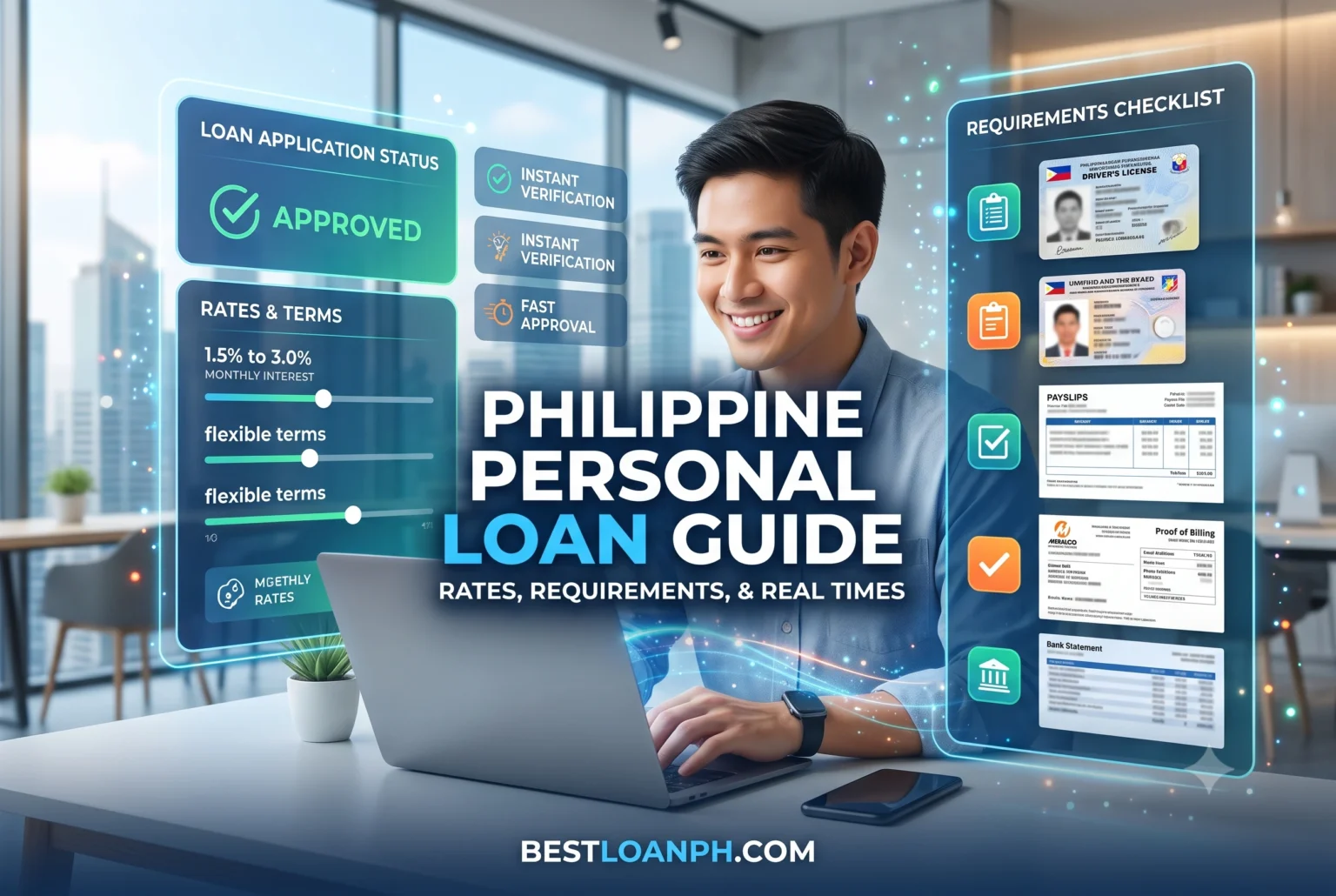
We know that looking for a loan usually comes with a heavy dose of stress. Whether you are a salaried employee scrambling to fund sudden home repairs after a typhoon, or a parent trying to bridge the gap for this semester’s tuition fees, the pressure is real and often overwhelming. First, let us clear the air: struggling with debt is an incredibly common human experience, and under Philippine law, no one goes to jail simply for being unable to pay a standard civil debt. You are not alone in this, and you have options. The key is finding a safe, regulated financial product that genuinely fits your current capacity to pay, rather than one that will pull you deeper into a cycle of borrowing.
Summary: Securing a personal loan philippines requires understanding the distinct differences between traditional bank offerings and modern digital lending apps. While commercial banks offer lower interest rates for borrowers with strong credit and high incomes, digital lenders provide faster access and more flexible approvals using alternative data. Knowing your exact debt-to-income ratio, preparing the right income documents, and carefully reviewing the Effective Interest Rate (EIR) are the most critical steps to getting approved safely and affordably.
Key Takeaways: Traditional Banks vs. Digital Lenders
| Feature | Commercial Banks | Digital Banks & Fintech Apps |
| Best For | High loan amounts, long-term repayment | Fast cash, flexible income verification |
| Average Interest | 1.2% to 1.7% per month | 2.5% to 5%+ per month |
| Approval Time | 3 to 7 banking days | 24 hours to 3 days |
| Income Proof | Strict (ITR, Payslips, COE) | Flexible (Bank statements, alternative data) |
| Credit Check | High (TransUnion, CIC) | Moderate (Internal algorithms, digital footprint) |
What exactly is a personal loan in the Philippines?
A personal loan is a non-collateral borrowing tool provided by commercial banks or digital lenders, allowing you to borrow a lump sum of money and pay it back in fixed monthly installments. Because it is unsecured, lenders rely entirely on your credit evaluation and a signed promissory note rather than seizing assets if you default.
When you borrow money without pledging your house or car as collateral, the financial institution takes on significantly more risk. This is why unsecured loans naturally carry higher interest rates than housing or auto loans. In the Philippines, the lending market is strictly regulated by the Bangko Sentral ng Pilipinas (BSP) for banks and the Securities and Exchange Commission (SEC) for lending companies. These regulators mandate that lenders transparently disclose all fees and exact repayment schedules before you sign anything. A standard loan tenure usually ranges from 12 to 36 months, allowing borrowers to spread out the cost through predictable amortization schedules.
Where should you borrow money: Traditional Commercial Banks or Digital Lenders?
You should choose traditional banks for larger amounts and lower interest rates if you have formal employment, but pivot to digital lenders if you need immediate funds or have non-traditional income. Your specific financial profile dictates which tier of lending will actually approve your application.
Mapping your financial reality to the right lender is half the battle. When our team tested the application flows of top-tier commercial banks like BDO and BPI, the credit evaluation heavily favored tenured corporate employees with minimum gross monthly incomes of PHP 20,000 to PHP 30,000. These institutions offer the safest routes, but they are incredibly rigid.
On the flip side, digital banks (like Tonik, Maya, or CIMB) have engineered their systems for the underserved market. They use alternative credit scoring. If you are a gig economy worker, they might look at your digital wallet transaction volume or e-commerce behavior instead of asking for three years of tax returns. The trade-off for this leniency is cost; digital platforms price their loans higher to offset the elevated risk of defaults.
What do lenders ask for to approve your application?
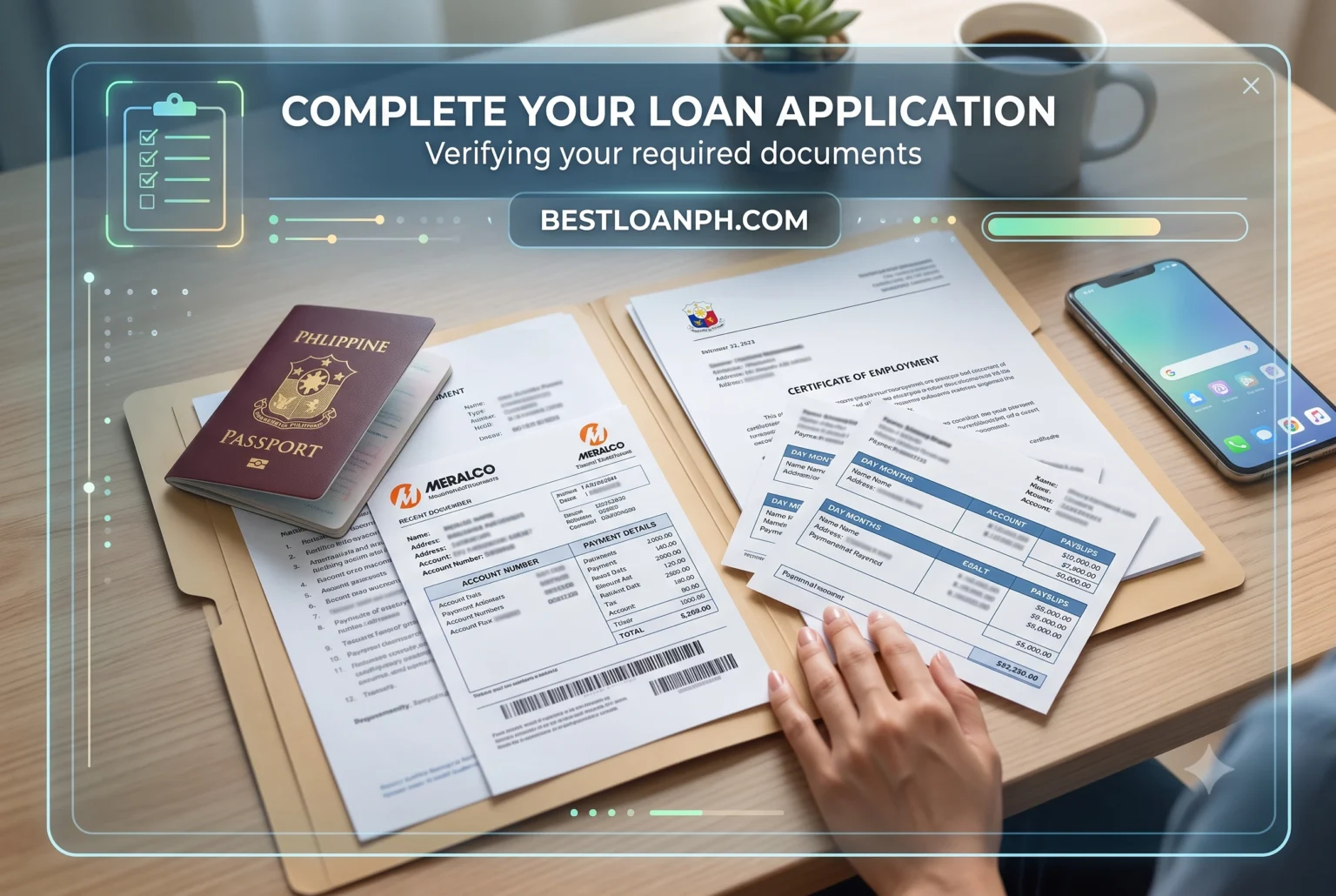
Standard requirements include a valid government-issued ID, proof of stable income (like a Certificate of Employment or payslips), and a recent proof of billing matching your residential address. These documents prove your identity, capacity to pay, and contactability.
Gathering your paperwork ahead of time drastically reduces back-and-forth delays. The exact standard personal loan requirements vary slightly by institution, but they all share the same goal: risk mitigation. Banks need to see a stable cash flow that comfortably covers your existing living expenses plus the new loan amortization.
How do requirements change if you are a freelancer or gig worker?
Freelancers must provide alternative proof of cash flow, such as six months of bank statements, PayPal transaction histories, or active client contracts, since they cannot produce standard corporate payslips. Lenders want to see consistency in your earnings over a longer period to offset the perceived instability of gig work.
Applying for a personal loan for freelancers comes with unique friction points. In our experience testing digital loan apps with freelancer profiles, automated eKYC (Electronic Know Your Customer) systems frequently flag inconsistent income deposits. If your income fluctuates wildly from PHP 15,000 one month to PHP 80,000 the next, traditional algorithms might reject you. We found that manually uploading a registered DTI business permit or an Upwork Certificate of Earnings alongside an actively used bank account statement drastically improved approval odds.
How much will borrowing really cost you?
While advertised interest rates range from 1.2% to 3% per month, the Effective Interest Rate (EIR) is the true cost, often pushing the actual financial burden much higher once processing fees and documentary stamp taxes are factored in. You must look at the EIR, not just the monthly add-on rate, to understand your actual debt obligation.
A common trap borrowers fall into is only looking at the monthly add-on rate. Evaluating personal loan interest rates requires reading the fine print. Let us say a bank offers a 1.5% add-on rate per month. That sounds manageable. However, the BSP requires all lenders to present the Effective Interest Rate (EIR). The EIR calculates the compounding effect of the interest and subtracts upfront deductions—like a PHP 1,500 processing fee and Documentary Stamp Tax (DST)—from your actual loan proceeds.

If you apply for PHP 50,000, you might only receive PHP 47,500 in your bank account, but you are still paying interest on the full PHP 50,000. This makes your real cost of borrowing significantly higher than the advertised percentage. Always ask the loan officer for the exact monthly amortization and the total repayment amount before signing the promissory note.
How long does personal loan approval take in 2026?
Traditional bank approvals take between 3 to 7 banking days due to manual credit investigations, whereas digital lending platforms can process and disburse funds within 1 to 24 hours. Your choice of lender and the clarity of your submitted documents directly dictate the speed of disbursement.
When you are in an emergency, waiting a week for an email update feels like an eternity. If you are specifically searching for a quick personal loan online, digital banks and SEC-licensed fintech apps are your safest bets. However, “instant approval” marketing often hides real-world operational delays.
During our hands-on testing of several leading digital lending apps, we encountered specific bottlenecks. For instance, automated eKYC systems are highly sensitive to glare and ID wear. When our team tested an application using a UMID card with faded edges, the system rejected the automated scan, forcing the application into a manual review queue. That simple visual error delayed a promised “5-minute approval” into a 48-hour waiting game. To avoid this, ensure your ID photos are taken in natural lighting with zero glare on the plastic lamination.
What happens if your credit history is less than perfect?
Borrowers with poor credit histories will likely face rejections from commercial banks but can explore alternative fintech lenders who look at current debt-to-income ratios rather than past credit scores. Securing a loan with a bad credit footprint means accepting much higher interest rates and smaller initial loan amounts.
When past financial mistakes haunt your current applications, it feels incredibly discouraging. Trying to get a personal loan with bad credit is difficult, but it is not entirely impossible. Commercial banks pull data from the Credit Information Corporation (CIC) and TransUnion. If you have unpaid credit cards or previously defaulted on a motorcycle loan, their rigid risk algorithms will automatically decline your application.
Instead of reapplying to banks and hurting your credit score further with multiple hard inquiries, shift your focus. Certain SEC-registered lending apps focus heavily on your current Debt-to-Income (DTI) ratio rather than a historical score. They want to know: Out of the money you earn today, how much is already going to debts? If your DTI is below 40%, you have a fighting chance. Be cautious, though. The lenders willing to accept bad credit profiles offset their risk by charging steep rates. Borrow only what is absolutely necessary to survive your immediate emergency, and map out a strict repayment plan to avoid falling into a deeper debt trap.
How can you protect yourself from predatory lending apps?
Always verify the lender’s registration on the official SEC website and avoid any app that demands access to your personal contact list, photo gallery, or social media accounts. Legitimate lenders evaluate your financial documents, while illegal loan sharks use your private data for public shaming and harassment.
The National Privacy Commission (NPC) and the SEC have cracked down heavily on abusive lending practices, but rogue operators still slip through the cracks. A legitimate fintech app will only ask for camera permissions to scan your ID and take a live selfie. If an app requests permission to read your text messages or access your phonebook, uninstall it immediately. True financial help should never cost you your dignity or your privacy.
References
- Bangko Sentral ng PilipinasOrganization: BSPResource: Financial Consumer Protection GuidelinesURL: https://www.bsp.gov.ph/Pages/Regulations/FinancialConsumerProtection.aspx
- Securities and Exchange Commission PhilippinesOrganization: SECResource: List of Registered Online Lending PlatformsURL: https://www.sec.gov.ph/lending-companies-and-financing-companies-2/list-of-registered-online-lending-platforms/
- Credit Information CorporationOrganization: CICResource: Understanding Your Credit ReportURL: https://www.creditinfo.gov.ph/understanding-your-credit-report
Last Updated: August 24, 2026 by The Nomad Finance Girl (Jaycee)
