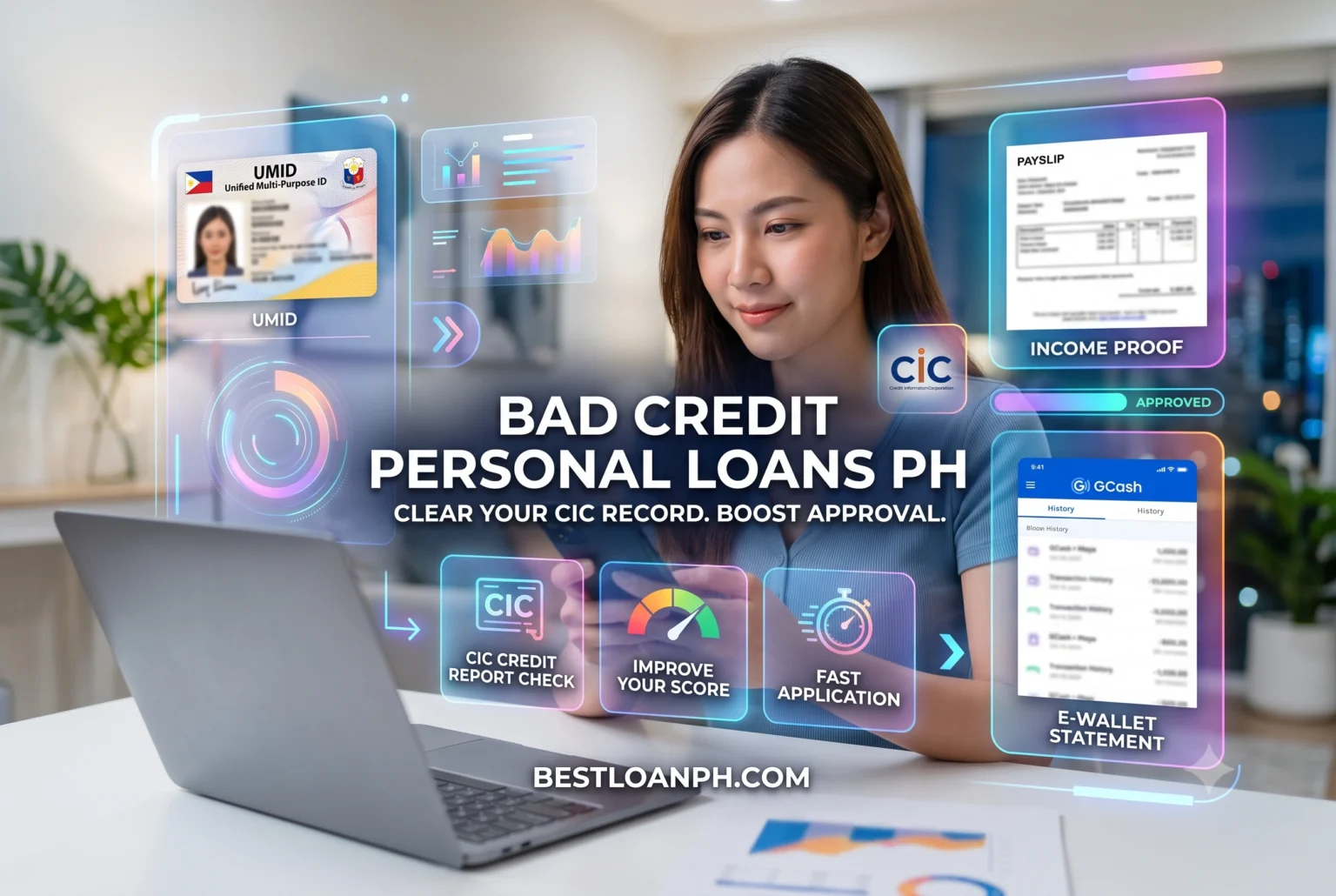
It happens more often than anyone likes to admit. You lost a job during a crisis, a family medical emergency wiped out your savings, or you simply mismanaged a credit card in your twenties. Now, a past default is haunting your financial present. If you are sitting there staring at a rejected loan application, feeling completely locked out of the banking system, take a breath. Under Article III, Section 20 of the 1987 Philippine Constitution, no person shall be imprisoned for debt. You are not facing jail time for a defaulted credit card or an unpaid civil loan.
However, ignoring the problem will not fix your credit score. Based on my decade of underwriting and analyzing risk in the Philippine fintech sector, obtaining a personal loan with a bad credit history is extremely difficult—but it is not impossible. It requires understanding exactly how local banks view risk, knowing which alternative lenders are legitimate, and doing the heavy lifting to manually clear your name from the national registry.
Summary: Securing a personal loan in the Philippines with bad credit requires clearing your negative records with the Credit Information Corporation (CIC) or seeking alternative financing. Traditional banks will automatically reject applicants with active defaults, but borrowers can access secured credit cards, credit-builder loans, or licensed fintech platforms while manually disputing and updating their cleared records with a Certificate of Full Payment.
Quick Reference: Lending Options and Credit Recovery
| Financial Strategy | Approval Probability with Bad Credit | Best Used For | Credit Impact |
| Traditional Bank Loans | Near Zero (0-5%) | Prime borrowers seeking high amounts | Requires a clean CIC record |
| Fintech App Loans | Moderate (40-60%) | Emergency cash, small-ticket needs | Builds credit if the app reports to CIC |
| Secured Credit Cards | Very High (90%+) | Bypassing bad credit via cash deposits | Highly effective for rebuilding a score |
| Manual CIC Dispute | N/A (Administrative process) | Removing “bad hits” from past defaults | Restores eligibility for bank loans over 3 years |
What Happens If I Have an Unpaid Credit Card or Loan in the Philippines?
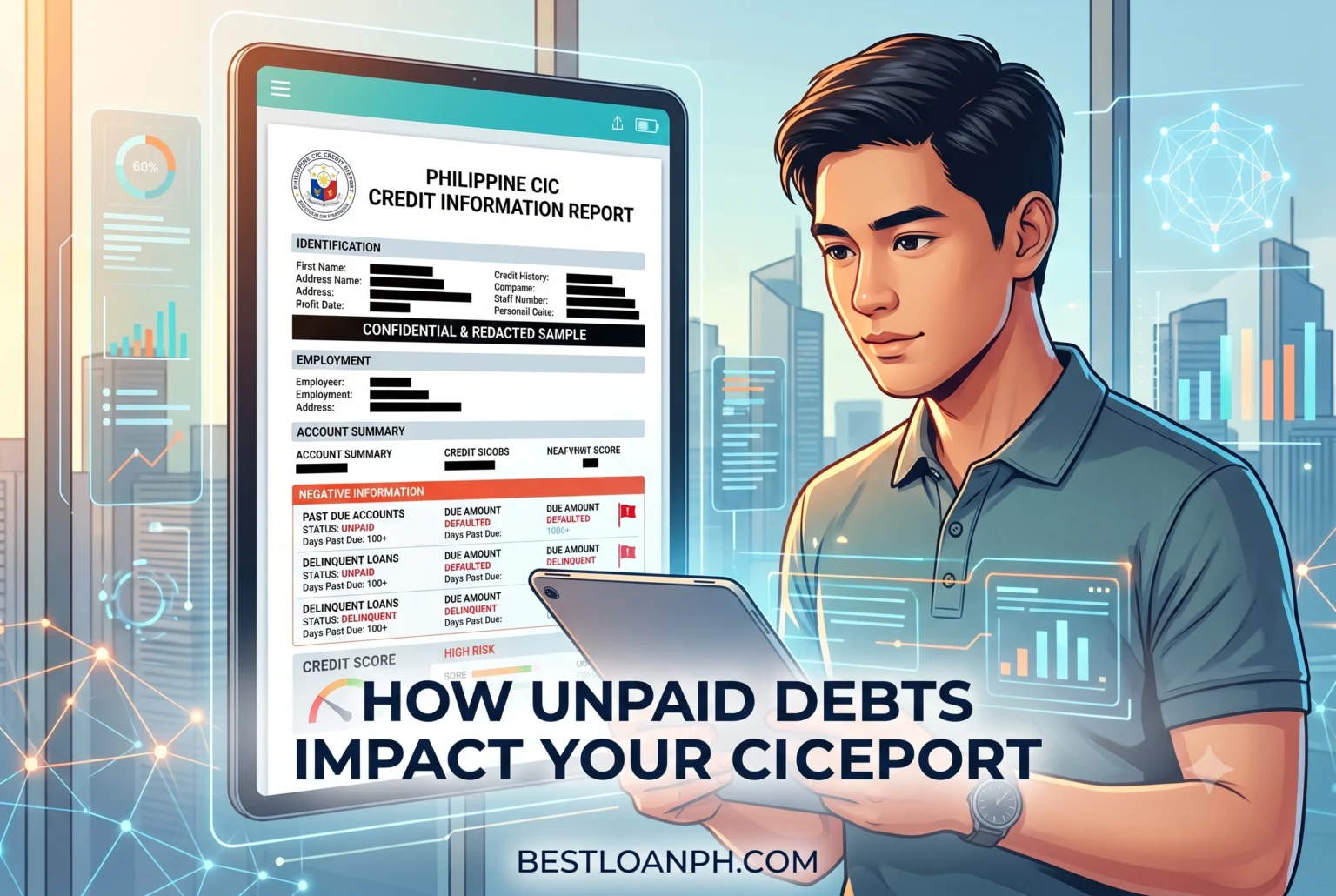
If you have an unpaid debt in the Philippines, the lender reports your default to the Credit Information Corporation (CIC), creating a negative record or “bad hit.” This severely lowers your credit score, causing automatic rejections from traditional banks for future loans, mortgages, or credit cards.
When you default on a financial obligation, the bank does not just forget about it. After 90 to 180 days of non-payment, most Philippine banks write off the debt and sell it to a third-party collection agency or a Special Purpose Vehicle (SPV). During this period, your missed payments are actively logged.
How Does the Credit Information Corporation (CIC) Work?
The CIC is the central public registry where all Philippine financial institutions mandate the submission of borrower credit data. Banks and lenders pull your CIC report to evaluate your payment history before approving any credit application.
The CIC acts as the primary brain of the Philippine lending ecosystem. While private bureaus like TransUnion and the Credit Management Association of the Philippines (CMAP) exist, the CIC is the government-mandated repository. When I evaluate risk models for lending apps, the API calls pull directly from these registries. If a borrower has a string of “90+ Days Past Due” markers, the algorithm triggers an automatic rejection before a human ever looks at the file. The system does not care why you missed the payment; it only registers the statistical risk you represent.
How Long Does a Bad Credit Record Stay With the CIC?
Under CIC policies, negative credit data stays on your report for three years from the date the debt was fully paid or settled. If the debt remains unpaid, the negative record will persist on your file indefinitely.
Many borrowers mistakenly believe that ignoring a debt for five or ten years will cause it to “expire.” This is a dangerous myth. While the statute of limitations for filing a civil case for collection exists, the negative data sitting in the CIC registry does not just wash away. Once you finally pay off a collection agency, the clock starts. You will need to wait 36 months of clean financial behavior before that specific negative marker drops off your visible report.
Can I Still Get Approved for a New Loan With Existing Bad Credit?
Yes, but your options are strictly limited to secured loans, specific fintech platforms, or non-traditional lenders. Traditional commercial banks will uniformly reject applications from individuals with active, unpaid defaults.
The reality of lending is purely mathematical. Institutions manage risk profiles, and active defaults sit outside the acceptable risk appetite for standard unsecured lending.
Do Banks Accept Applicants With Defaulted Loans?
No, traditional Philippine banks (like BDO, BPI, or Metrobank) utilize automated underwriting systems that instantly decline unsecured personal loan applications if a CMAP or CIC check reveals an active default.
In my experience analyzing bank-side operations, branch managers have virtually no override authority for bad credit hits on unsecured personal loans. The credit engines are hardcoded to reject these applications. Even if your income has doubled since the pandemic and you are currently earning a six-figure salary, the outstanding ₱15,000 credit card debt from 2019 will block the approval. To banks, past behavior is the only reliable predictor of future behavior.
Are There Online Lending Apps That Ignore Bad Credit?
Some licensed digital lenders and lending apps use alternative data scoring—such as smartphone usage or e-wallet transactions—instead of relying solely on CIC reports. These platforms may approve you, but they charge significantly higher interest rates to offset the risk.
When traditional doors close, borrowers often turn to the digital space. While searching for online loans with fast approval, you will find platforms like Tala, JuanHand, or Billease. When our team tested the underwriting behaviors of these apps, we found they heavily weight real-time data over historical mistakes. For example, if you have an active, healthy cash flow in your GCash or Maya wallet, some apps will grant you a small credit line even with a past bank default. However, be extremely cautious: you must verify the lender is registered with the Securities and Exchange Commission (SEC) to avoid abusive, illegal loan sharks.
How Do I Manually Clear a “Bad Hit” on My CIC Credit Report?
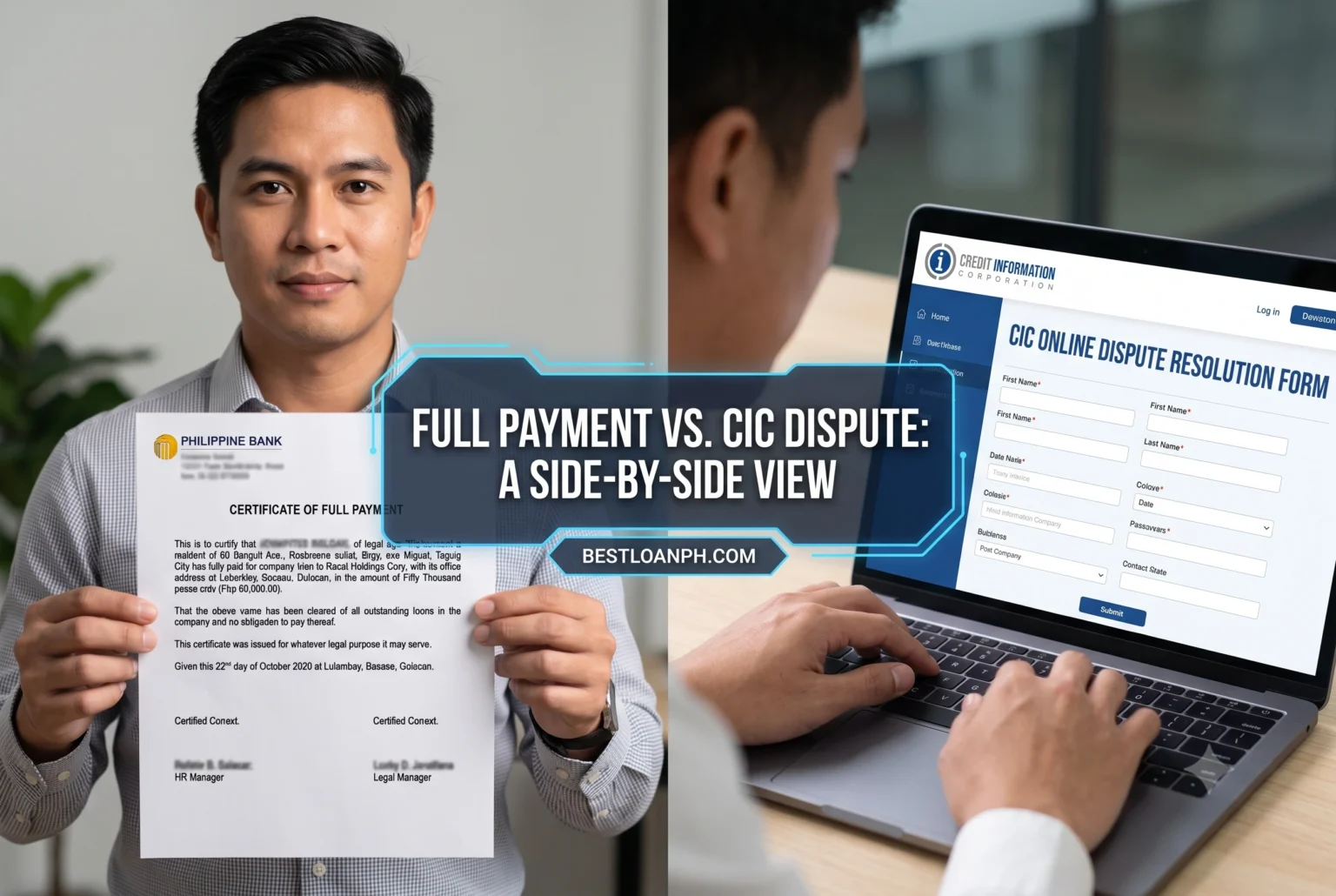
To clear a bad hit, you must obtain a Certificate of Full Payment from your lender or collection agency, then submit it directly to the CIC via their online Dispute Resolution Process. Relying on the collection agency to update the registry for you is a massive mistake.
This is the operational secret most borrowers miss. When you settle an old debt with a collection agency, the agency’s priority is securing their commission, not doing administrative paperwork for the CIC. I have reviewed countless cases where borrowers paid off their debts years ago, only to get rejected for a car loan because the collection agency never updated the status from “Unpaid” to “Settled.”
How Do I Get a Certificate of Full Payment From a Collection Agency?
After paying your negotiated settlement amount, you must aggressively follow up with the collection agency to issue an official Certificate of Full Payment. Demand this document in your settlement negotiations before transferring any funds.
When dealing with Special Purpose Vehicles or collection agencies, get everything in writing. If they offer you an “amnesty” discount (e.g., paying ₱30,000 to clear a ₱50,000 debt), demand an email stating that this exact amount constitutes full and final settlement. Once the check clears or the transfer is complete, call them daily if necessary. The Certificate of Full Payment (CFP) or Clearance Certificate is your only tangible proof that the debt is resolved. Ensure the document includes your full name, the specific account number, the date of settlement, and a clear statement releasing you from further liability.
How Do I Submit Proof of Payment to the CIC for a Dispute?
Borrowers must log into the CIC website, request a copy of their credit report, identify the erroneous unpaid account, and file an online dispute attaching the Certificate of Full Payment as evidence. The CIC typically processes these corrections within 30 days.
I once sat next to a client and walked them through this exact UI flow on their smartphone. You start by securing your current CIC credit report (which often requires a minimal fee and KYC verification). Once you spot the account still tagged as delinquent, you initiate a Dispute via the CIC web portal. You will select the specific tradeline, choose the reason (“Account is already paid/settled”), and upload the scanned CFP and a valid ID. The CIC will then contact the financial institution to verify the document. Once verified, they update your record. This manual intervention is non-negotiable if you want to rebuild your financial life.
What Are the Best Alternative Options While Rebuilding My Credit?
While waiting for your credit score to recover, you can utilize secured credit cards or explore cooperative loans to access funds and demonstrate positive repayment behavior. These methods bypass standard credit checks by collateralizing the risk.
Rebuilding a damaged financial reputation takes time, but you do not have to live completely without financial tools during this period. When assessing the types of personal loans in the Philippines, borrowers with bad credit must pivot away from unsecured bank cash loans and look toward community-based or secured products.
Should I Try a Credit-Builder Loan or Secured Credit Card?
A secured credit card is the most effective tool for rebuilding credit in the Philippines. By placing a cash deposit (e.g., ₱15,000) with a bank, they issue a card with a limit equal to a percentage of that deposit, effectively guaranteeing approval regardless of past credit history.
Products like the Security Bank Fast Track or BPI Express Start are specifically designed for this scenario. If you deposit ₱20,000 into a hold-out savings account, the bank will give you a credit card with a ₱16,000 limit. Because your cash secures the line, they skip the CMAP/CIC rejection process. If you use this card for groceries and pay the balance in full every single month, the bank reports this positive behavior to the CIC. Over 12 to 24 months, this fresh stream of positive data actively dilutes the impact of your old “bad hits.”
Which Non-Traditional Lenders Look Beyond the Credit Score?
Credit cooperatives, company payroll loans, and government loans (SSS/Pag-IBIG) evaluate your membership tenure, current salary, or contributions rather than strictly pulling commercial credit bureau reports.
If you are employed, check if your company offers a salary loan program or has a partnership with a specific bank. Because payroll loans are deducted directly from your paycheck before you even see the money, the risk of default is incredibly low. Consequently, these programs rarely run deep credit checks. Similarly, joining a reputable local cooperative requires time to build share capital, but cooperatives lend based on your relationship and character within the community, offering a lifeline outside the rigid corporate banking structure.
Frequently Asked Questions About Bad Credit Loans in the Philippines
Can Unpaid Online Loans Lead to Imprisonment in the Philippines?
No, you cannot be jailed for failing to pay a civil debt like an online loan or credit card. However, if you issue bouncing checks (violating BP 22) or commit intentional fraud during the application, you can face criminal charges.
Will an Unpaid PLDT or Globe Bill Affect My CIC Credit Score?
Currently, unpaid utility bills and telecommunication accounts (like Globe or Smart postpaid plans) are generally not integrated into standard CIC credit reports. However, telecom companies maintain internal blacklists and may share data with private third-party collection agencies.
References
- Credit Information Corporation (CIC)Organization: Republic of the Philippines Credit Information CorporationResource: Know Your Rights – Dispute ResolutionURL: https://www.creditinfo.gov.ph/dispute-resolution
- Bangko Sentral ng Pilipinas (BSP)Organization: Bangko Sentral ng PilipinasResource: Financial Consumer Protection DepartmentURL: https://www.bsp.gov.ph/SitePages/InclusiveFinance/ConsumerProtection.aspx
- Securities and Exchange Commission (SEC)Organization: SEC PhilippinesResource: List of Registered Lending CompaniesURL: https://www.sec.gov.ph/lending-companies-and-financing-companies-2/list-of-registered-lending-companies/
Last Updated: August 24, 2026 by The Nomad Finance Girl (Jaycee)
